 0410 686 585

The right gi doesn’t always come as a perfectly matched set. The jacket and trousers may need different sizes, so knowing how to choose a martial arts uniform means looking beyond your usual clothing size to the cut, discipline and manufacturer’s size chart.
It’s reasonable to expect one size to fit from shoulder to ankle. But gi sizing varies by style and fabric, so a chart for one uniform may not suit another. Height and weight help narrow the choice, while the room to move matters just as much.
This guide explains how to read height and weight charts, when separate jacket and trouser sizes make sense, and how uniforms differ across Karate, Taekwondo, Kung Fu and grappling arts. You’ll also learn what to check in the fit so your uniform supports focused, confident training.
Key Takeaways
- Use the sizing chart for the specific gi style and brand; height and weight are more useful guides than everyday clothing size.
- Jacket and trouser sizes can differ, so a matching set isn’t the only route to a comfortable fit.
- Choose a uniform that allows full movement without excess fabric, and consider your body shape as well as your discipline.
- Karate, Taekwondo, Kung Fu and grappling call for different uniform features; match the style to the training.
1. Is sizing the same across all gi styles – Karate, Taekwondo, BJJ?
No. Karate gi sizing commonly runs from 000 to 7, but brands use different charts, cuts and size conventions. Taekwondo uniforms and Karate gi may also differ in shape and feel. Use the chart for the specific style and manufacturer, rather than assuming the same labelled size fits every uniform. For example, a Karate gi is typically lightweight for easier movement, while a Brazilian Jiu-Jitsu gi is often heavier for grappling training.
Brazilian Jiu-Jitsu and Judo both involve grappling, but their uniforms are designed for different movements and traditions. A tighter BJJ gi cut can make it harder for an opponent to grip the fabric. Judo focuses on throws and standing grappling, so a Judo uniform should suit those movements and the discipline’s expectations. A generic gi may not provide the fit your training needs.
For beginners, prioritise a comfortable uniform that allows easy movement rather than focusing only on fabric weight. Cotton is breathable, while poly-cotton blends offer durability. A lightweight option may feel more comfortable in hot weather. If you train frequently, look for durable fabric and follow its care instructions. The right balance depends on your discipline, training conditions and preferred feel.
Buying through your club can help you follow its uniform colour, style and patch guidelines. Other brands may offer different cuts and fabrics, but always use the sizing chart for the specific gi. If your school requires a particular style, a club-approved uniform is the practical choice.
Competition uniform rules vary across Karate, Taekwondo, Judo and BJJ. Requirements may cover style, fit, colour and permitted patches, depending on the sport, event and organiser. A gi suitable for everyday training may not meet event rules, so use the competition’s uniform guidance when choosing gear.
2. Choosing a gi size using height and weight charts
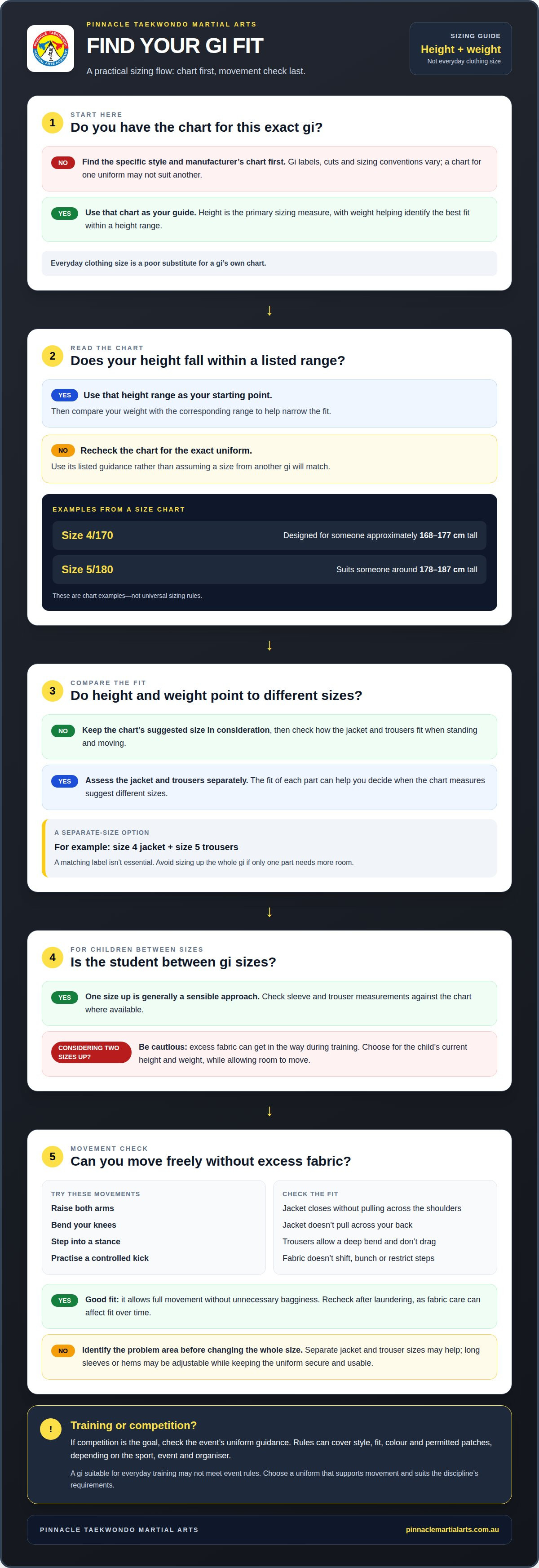
Start with the manufacturer’s chart for the exact gi. Sizing is based primarily on height, with weight helping identify the best fit within a height range. Everyday clothing size is a poor substitute because gi labels and cuts vary. For example, a size 4/170 gi is designed for someone approximately 168-177 cm tall. A size 5/180 gi suits someone around 178-187 cm tall.
Use the chart as a guide, not a universal sizing rule. First, find the height range that includes the student, then compare their weight with the corresponding range. If height and weight suggest different sizes, the fit of the jacket and trousers can help you decide. For Karate, Taekwondo or another style, use that uniform’s own chart rather than relying on a size from a different gi.
For children between gi sizes, choosing one size up is generally a sensible approach. Going two sizes up can leave excess fabric that gets in the way during training. A growing child may need room to move, but the uniform should still suit their current height and weight. Check sleeve and trouser measurements against the chart where available.
A matching label isn’t essential for every student. Some gi jackets and trousers can be ordered separately, such as a size 4 jacket with size 5 pants. This can help when a student’s upper and lower body need different sizes. Avoid choosing a larger size across the whole gi if only one part needs more room.
For a proper fit, compare both measurements with the selected chart, then assess how the uniform sits when standing and moving. The jacket should allow comfortable movement; the trousers shouldn’t drag or restrict steps. If competition is the goal, sizing still needs to support movement while meeting the event’s uniform rules. Students considering Karate classes can keep their discipline in mind as they choose a uniform.
3. Inclusivity and body-fit considerations
A uniform should fit the person training, not an assumed body shape. Check that the jacket sits comfortably across the shoulders and closes without pulling. The trousers should stay secure while allowing a stable stance. A size label can’t tell you whether the cut suits longer legs, broader shoulders or a shorter torso. Judge the fit on movement, not appearance alone.
Test the uniform with movements used in class. Raise both arms, bend your knees, step into a stance and practise a controlled kick. The jacket shouldn’t pull across your back, and the trousers shouldn’t restrict a deep bend. Check for excess fabric that shifts or bunches. These practical checks help you find a fit that supports training without unnecessary bagginess.
A gi that’s too small can restrict movement, while a larger one may be altered or managed. Identify the problem area before changing the whole size. If the jacket limits shoulder movement but the trousers fit comfortably, separate sizes may work better. If the sleeves or hems are long, consider whether they can be adjusted while keeping the uniform secure and usable.
Fit needs also vary by martial art. Grappling places different demands on a uniform than practising strikes or stances. For example, a student working on ground movements needs a gi that stays comfortable through bends and turns. A Karate student should be able to extend their arms and legs freely. Choose a uniform that suits both the student’s proportions and their training style.
Repeat the movement check after laundering, as fabric care can affect fit over time. For a child, assess the uniform as they stand, reach and move instead of buying excessive room for growth. A comfortable fit helps the student focus on technique rather than adjusting sleeves, jacket or trousers throughout class.
4. Uniform types by martial arts discipline
Choose a uniform for your discipline’s movements and traditions, not just its appearance. A Karate gi is typically lightweight, supporting the quick strikes and movement practised in class. Taekwondo students also need freedom to move through kicks and stances. A school may set its own uniform colour or style, so follow those expectations as well as choosing for the martial art.
Kung Fu uniforms often include traditional sashes and allow flexibility for varied movement. Brazilian Jiu-Jitsu gis are usually heavier because grappling puts fabric under repeated pressure. Their tighter cuts can make the uniform harder for an opponent to grip. Judo also involves grappling and throws, but its uniform has a distinct style. Choose gear designed for the art you train in rather than treating all gis as interchangeable.
For grappling, inspect the trousers as carefully as the jacket. Avoid pockets in grappling trousers or shorts, as fingers can become caught. Check the whole uniform for secure stitching, tears and loose threads that could trap fingers or toes. Avoid zippers, which can scratch or cut training partners. These checks help keep your uniform practical and ready for class.
In Australia, uniform prices depend on the style, fabric, size and any required patches; the price is given after a quote request. A club-approved uniform may suit a school’s requirements, while a different style may suit another discipline. Competition rules also vary by event and martial art, so a uniform suitable for class may not meet an event’s requirements.
Make the decision in this order: identify the discipline, follow the school’s uniform guidance, then choose a comfortable style made for that training. For uniforms suited to martial arts practice, explore martial arts equipment and uniforms.
Pinnacle Taekwondo Martial Arts: Martial arts equipment and uniforms
Pinnacle Taekwondo Martial Arts supplies martial arts equipment and uniforms to help students prepare for training. When choosing a gi for a child, consider their discipline and whether the fit allows them to move comfortably.
Families can also explore Kids Martial Arts, Kids Kung Fu and Kids Self Defence at Pinnacle Taekwondo Martial Arts. These structured programs help children develop skills, focus and confidence through martial arts training. A uniform suited to the activity can help them feel ready to take part.
For guidance on equipment and uniforms, contact Pinnacle Taekwondo Martial Arts.
Make your next move with confidence
A uniform is part of getting started, but progress comes from showing up, practising and building steady habits. For a child, the right martial arts setting can help make training a positive routine. Pinnacle Taekwondo Martial Arts offers Kids Martial Arts, Kids Kung Fu and Kids Self Defence, giving families a structured way for children to develop skills and confidence.
When putting how to choose a martial arts uniform into practice, focus on what supports your training and helps you feel ready to participate. Choose a uniform that suits the discipline and lets you concentrate on learning, not adjusting your gear. Take the next step with purpose, whether you’re preparing your child for classes or starting your own training.
Contact Pinnacle Taekwondo Martial Arts to discuss your next step. Start strong, keep learning and take pride in every bit of progress.
Frequently Asked Questions
Do gi pants and jackets always come in matching sizes?
No. Some uniforms let you choose separate sizes for the jacket and trousers. This can help if one piece fits well while the other pulls or sits awkwardly. For example, a student with a comfortable jacket but restrictive trousers may need a different trouser size. Make sure both pieces suit the same discipline and allow comfortable movement together.
How do I know what size gi to order?
Measure the student’s current height and weight, then compare both with the chart for the exact uniform. If the measurements point to different options, use the chart’s weight range to guide your choice. For a child between sizes, choose one size up rather than two. After trying it on, check that the sleeves and trousers don’t interfere with movement.
How much do cotton gi shrink?
Pre-shrunk cotton gi usually shrink less than 2-3% with regular cold washing. A non-pre-shrunk gi may feel about one size too large before its first wash, because its sizing includes a shrinkage allowance. Follow the garment’s care instructions and avoid assuming every cotton uniform will shrink by the same amount. The fabric treatment and washing method both matter.
Is sizing the same across all gi styles, including Karate, Taekwondo and BJJ?
No. Size labels can differ between brands, and a chart for one style may not match another. Identify the specific gi style and brand, then use its own chart. For example, don’t rely on a Karate gi size to choose a BJJ gi. The cut and fabric can differ, so check each uniform separately.
Ready to Gear Up for Martial Arts?
If you’re deciding how to choose a martial arts uniform, start by matching it to the discipline and any school guidelines. Before the first class, read the care label, remove jewellery and check the garment for loose threads or damage. Keep the uniform clean and ready between sessions. These habits help you arrive prepared and focus on learning.
What is the importance of choosing the right martial arts uniform?
Understanding how to choose a martial arts uniform helps you select clothing that supports movement and suits your discipline’s practical needs. A uniform for grappling differs from one for striking, for example. The right choice can reduce distractions from constant adjustments, help you meet school expectations and support respectful training alongside others. Focus on comfort and purpose, not appearance alone.