 0410 686 585

Skill matters, and so does the person teaching it. Kung Fu classes in Marrickville should build movement, control and confidence through structured training. When choosing a class, especially for a child or beginner, consider the instructors’ experience and how they guide students.
It makes sense to look beyond impressive techniques. Self-defence training can also develop awareness, discipline and calm decision-making, not just physical skills. This article explains what to consider in an instructor, how martial arts classes can differ and how Kung Fu fits into practical self-defence. You’ll also find details to help plan your trip to the Marrickville club and make an informed choice.
Key Takeaways
- Learn which instructor experience and qualifications can help you assess the quality of martial arts training.
- Understand how Kung Fu and other martial arts classes differ, so you can choose a training focus that suits your goals.
- Get practical pointers for planning your journey to a Marrickville club using local transport and parking options.
- Explore how Kids Kung Fu and Kids Self Defence can support a child’s structured martial arts training.
Are your instructors qualified?
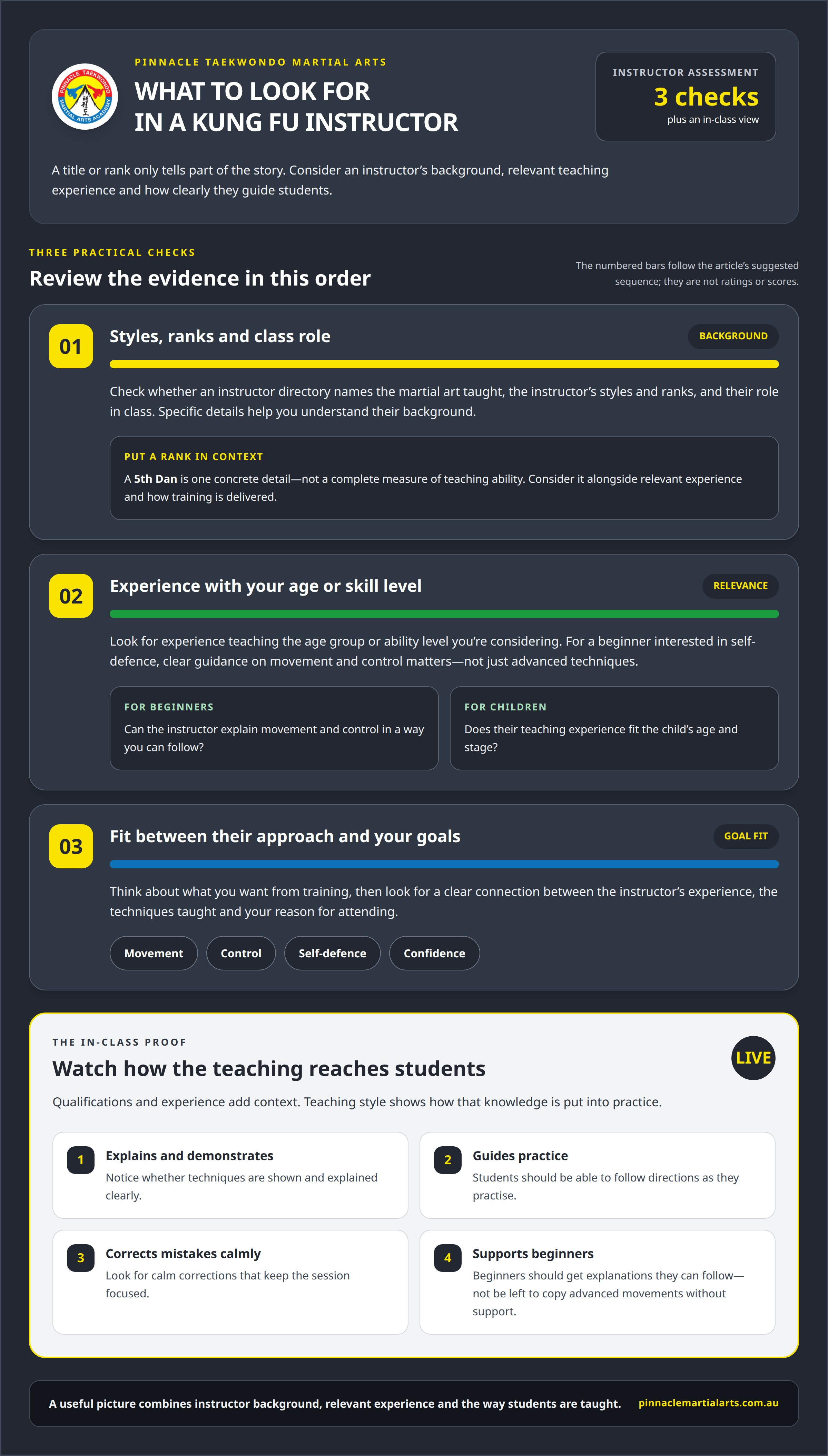
Instructor experience matters, but a title alone doesn’t show how well someone teaches. For Kung Fu classes in Marrickville, look for clear information about instructors’ martial arts backgrounds and teaching roles. Details about their styles, ranks and coaching experience can help you understand what they bring to class.
Use three practical checks when reviewing instructor information. First, note the styles and ranks listed. Second, look for experience teaching the age group or skill level you’re considering. Third, consider whether the approach suits your goals. A beginner interested in self-defence, for example, needs clear guidance on movement and control, not just advanced techniques.
Reading an instructor directory
An instructor directory can help you connect names with backgrounds and class roles. Read each profile for specific details, such as the martial art taught and the instructor’s experience. If a listing gives a rank, treat it as one part of the picture, not a complete measure of teaching ability. A 5th Dan rank, for example, is a concrete detail to interpret alongside relevant teaching experience and the way training is delivered.
Good instruction is visible in class. Watch how an instructor explains and demonstrates a technique, then guides students as they practise. Students should follow directions, while instructors correct mistakes calmly and keep the session focused. Notice whether beginners get explanations they can follow rather than being expected to copy advanced movements without support.
Qualifications and experience offer context about an instructor’s background, while teaching style shows how that knowledge reaches students. Consider both, and look for a clear connection between the instructor’s experience, the techniques taught and your reason for training.
Martial arts and combat sports classes in Marrickville
Marrickville classes include different options, such as Kung Fu, Karate, Taekwondo and Kickboxing. Compare their training focus and teaching approach, then consider which best fits your goals.
Kung Fu schools and martial arts clubs offer different class formats, and no single curriculum suits everyone. A mixed-discipline programme may include Kung Fu techniques alongside other styles, while a class focused on Kung Fu may spend more time on its movements and practice.
Children’s classes and age groups
Children’s programmes can group students by age, experience or both. The local academy programme described in this article starts at 3 years of age, while teen classes are listed for ages 13-18. For a child, look for age-appropriate instruction and a clear path from basic movement to more advanced training. A black belt may take 3-4 years, depending on the child’s commitment.
Schedules and enrolment policies
Class timetables and enrolment terms vary, so consider how session times fit your family’s routine. Before joining, understand the enrolment process, cancellation arrangements and expectations for training. Useful details include attendance, supervision, how techniques are taught and how students practise with partners.
Kung Fu techniques can be part of a broader martial arts curriculum, but a class name alone won’t tell you how much time each discipline receives. Consider what students practise, whether boxing or other combat sports are included, and how each element supports the class goals. This makes comparisons across the Inner West more useful than judging by the label alone.
For children, families can consider kids’ martial arts classes alongside adult and teen options. Choose a format that matches the student’s age, interests and preferred training focus.
Club location, parking and public transport
The Marrickville location is listed at 23 Yabsley Ave, Marrickville, in Sydney’s Inner West. Use that full address when planning your trip, as it gives you a clear destination for driving, walking or public transport. A separate listed location is 12 Banool St, Chester Hill, so make sure your journey is set for Marrickville rather than the other suburb.
For a car journey, map the route to 23 Yabsley Ave and identify nearby parking options before you leave. Parking availability and restrictions can vary, so allow time to find a suitable space and walk to the venue. Don’t assume a space will be available directly outside. A little preparation helps keep arrival calm, especially when travelling with children or carrying training equipment.
If you’re travelling by public transport, plan the full trip to the Marrickville address, including the final walk. Use a current transport planner to check routes and service times for your chosen day. Allow time for transfers or delays and save the destination for the journey. That way, you can arrive ready to train rather than rushing in.
A practical arrival plan can follow three simple steps:
- Set 23 Yabsley Ave as the destination, not just “Marrickville”.
- Choose your travel mode and plan the final approach to the address.
- Build in time to park or walk from public transport before class begins.
For regular classes, consider how the journey fits your weekly routine. A route that works after school or work may differ from one suited to weekend travel. If you’re attending a competition elsewhere in Sydney, plan that trip separately from your usual journey to Marrickville. A clear travel plan can make it easier to keep a consistent training routine.
Martial arts and self-defence
Self-defence training should build more than a sequence of moves. In martial arts classes, students can practise awareness, balance and controlled movement under instructor guidance. Kung Fu can contribute striking and defensive techniques, while other styles use different methods. Consider how each skill supports personal safety.
Pinnacle Taekwondo Martial Arts draws on Korean, Japanese and Chinese martial arts. A mix of styles can broaden training, but a style’s name alone doesn’t explain what students practise. Look for lessons that connect movement to practical situations, such as creating space, keeping a steady stance and responding calmly to a partner’s controlled approach.
Good self-defence also involves judgement. Students can learn to notice their surroundings, set boundaries and move away from escalating situations. Physical techniques are one part of that learning, not a reason to seek confrontation. In class, controlled partner drills can help students practise timing and distance while maintaining respect and control.
Fitness supports this training. Repeated movement can develop coordination, stamina and body control, helping students perform techniques with purpose. A beginner might start by practising a stable stance and a simple step away, then combine those movements in a controlled drill. Progress depends on consistent practice and useful feedback.
Teen classes are listed for ages 13-18, giving older students a dedicated training context. For younger students, age-appropriate instruction can make concepts such as personal space and assertive communication easier to understand. Across age groups, a clear takeaway matters: self-defence is about awareness, controlled options and getting to safety, not proving who is stronger.
Choose training that balances technique, fitness and decision-making. Explore martial arts and self-defence classes to find a structured place to develop those skills.
Pinnacle Taekwondo Martial Arts
Pinnacle Taekwondo Martial Arts offers structured classes for children to develop practical skills, discipline and confidence. Families considering Kung Fu or self-defence can explore Kids Martial Arts, Kids Self Defence and Kids Taekwondo programs.
The right starting point depends on your child’s interests and the skills they want to develop. Kung Fu may suit a child drawn to its techniques, while self-defence focuses on awareness and controlled responses. Taekwondo offers another martial arts pathway. Each option gives families a way to find purposeful, engaging training.
Ready to discuss a suitable class for your child? Contact Pinnacle Taekwondo Martial Arts.
Take the next step with confidence
Choosing Kung Fu classes in Marrickville is an opportunity to set a training goal and build a steady routine. Consider what matters most to your family: learning a martial art, developing practical self-defence skills, or strengthening focus and discipline. Choose a manageable next step and training that supports progress over time.
Pinnacle Taekwondo Martial Arts offers Kids Martial Arts, Kids Kung Fu and Kids Self Defence, giving families options to explore a child’s interests and goals. If you’re ready to discuss which direction could suit your child, contact Pinnacle Taekwondo Martial Arts. Start the conversation and take the next step towards building skills, discipline and confidence.
Frequently Asked Questions
Do all ages and fitness levels train together?
No. Training is organised through programmes for different age groups, with options designed for varied fitness levels. Children can join martial arts programmes suited to their age group. Teen’s Martial Arts is for ages 13-18, and Adult’s Martial Arts is a separate programme. This structure helps students work towards skills suited to their stage and goals.
How long will it take for my child to reach black belt level?
A child may reach black belt in 3-4 years, depending on their commitment. Progress is shaped by consistent participation and the effort a student brings to training. Use that timeframe as a guide, not a deadline. For example, a child who practises techniques regularly and applies instructor feedback is building the foundations needed for steady belt progression.
What are the charges?
Fees depend on the programme and enrolment arrangement. Tuition is offered through recurring class fees and term fees, so the total depends on the option selected. Consider the fee structure alongside your choice of group classes, private coaching or after-school care. There is no single fee across every option.
What variety of programs do you offer at your clubs?
Programmes include children’s, teen and adult martial arts, with training in Taekwondo, Karate, Kung Fu, Kickboxing and Hapkido. Self-defence and fitness are also available. Private one-to-one coaching offers individual instruction, while after-school care combines supervised care with martial arts activities. Choose based on age group, preferred discipline and training focus.
When can I train?
Your training schedule depends on the programme and club timetable. Start by matching the class category to your age group, then plan around its session times. For example, parents choosing children’s training should use the kids’ timetable rather than an adult class schedule. This helps keep your weekly routine aligned with the right programme.
What Kung Fu styles are taught in Marrickville?
Kung Fu is part of a broader curriculum alongside Korean and Japanese martial arts, with techniques and methods also drawn from Chinese martial arts. The programme combines disciplines rather than naming a specific Kung Fu style. If you have a particular interest, consider how Kung Fu techniques fit into the lessons and overall training approach.