 0410 686 585

Children can start structured martial arts classes in Chester Hill from age 3. The right class makes room for a young child to build movement skills and learn at a suitable pace, while older children, teens and adults can keep developing through training that matches their stage.
Families looking for martial arts in Chester Hill often want more than a workout. They may be seeking practical self-defence, fitness, coordination, confidence and discipline in one supportive activity. This guide explains what training can offer at different ages, how classes develop these skills and what to consider when choosing a style. You’ll also see how Taekwondo, Karate, Kung Fu, Hapkido, Boxing and Kickboxing bring different approaches to training, helping you find a starting point for yourself or your child.
Key Takeaways
- Choose training that builds awareness and confident responses, not just physical techniques.
- Use regular practice to develop fitness, coordination and focus alongside martial arts skills.
- Match the class and style to the student’s age, interests and goals, then build progress step by step.
- Explore how Karate, Kung Fu, Hapkido, boxing and kickboxing each offer a different training approach.
Self-defence and anti-bullying training
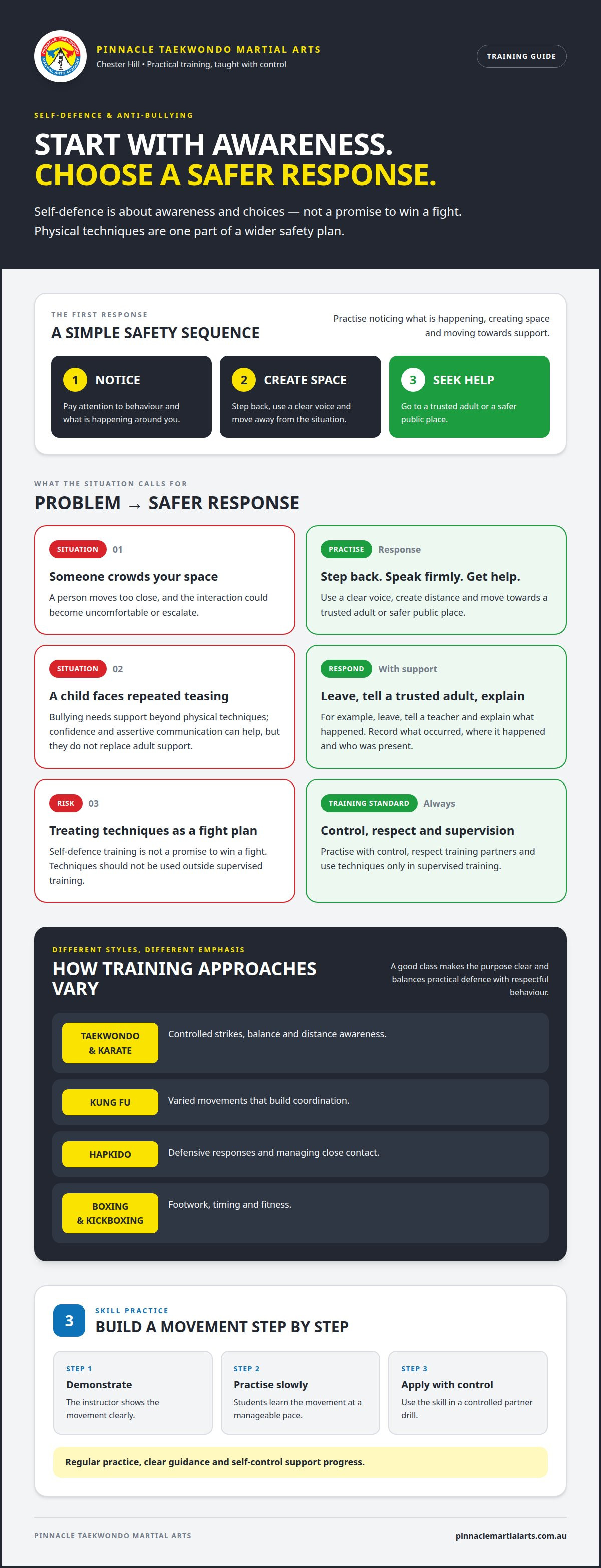
Self-defence starts with awareness and choices, not a promise to win a fight. In martial arts classes, students practise practical responses: notice behaviour, create space, use a clear voice and move towards a trusted adult or safer public place. For example, a child facing repeated teasing can leave, tell a teacher and explain what happened. Physical techniques are one part of a wider safety plan.
Different styles develop self-defence skills in different ways. Taekwondo and Karate practise controlled strikes, balance and distance awareness. Kung Fu builds coordination through varied movements, while Hapkido focuses on defensive responses and managing close contact. Boxing and Kickboxing develop footwork, timing and fitness. A good class makes the purpose clear: practise with control, respect training partners and use techniques only in supervised training.
Awareness can help students respond before a conflict escalates. Instructors can use a simple scenario, such as someone crowding a student’s space, to practise stepping back, speaking firmly and seeking help. When bullying occurs, the response should also include telling a trusted adult and recording what happened, including where it occurred and who was present. Martial arts can support confidence and assertive communication, but it doesn’t replace support from family or school staff.
Self-defence practice also develops fitness through movement, stance changes and repeated combinations. Students coordinate their hands and feet, stay focused and respond to instructions. Instructors can teach a skill in manageable steps: demonstrate the movement, practise it slowly, then apply it in a controlled partner drill. Across Sydney, including Chester Hill, Marrickville, Earlwood, Bankstown, Penrith and Caddens, families can look for training that balances practical defence, fitness and respectful behaviour. Progress comes from regular practice, clear guidance and self-control.
Fitness, coordination, confidence and discipline
Structured martial arts training connects physical fitness with focus and self-control. Taekwondo and Kung Fu offer different ways to practise these skills.
A class can develop fitness through repeated movement, stance changes and combinations. Students might practise a short sequence, pause for instruction, then repeat it with control. Following the pattern challenges coordination as the hands, feet and balance work together. Instructors can adjust the pace and complexity as students learn, helping them clarify each movement before adding another. This steady progression encourages students to focus on quality, not just speed.
Taekwondo often features precise kicking techniques and footwork, while Kung Fu includes varied movements that challenge coordination. Neither style is a shortcut to fitness or confidence. Consistent practice matters: students listen, try a movement, receive guidance and apply the correction on their next attempt. A structured class also gives school-aged students a clear routine, from lining up to practising with a partner. That routine supports focus without turning discipline into punishment.
Confidence building
Confidence grows through achievable challenges and visible progress. A beginner might practise a stance first, then add a simple movement once they have control. Instructors can give specific feedback, such as keeping balance through a turn, so students know what to improve. Look for a class that values effort and respectful practice, not just advanced techniques. Reaching a personal milestone might mean mastering a movement, not earning a belt.
Discipline and character development
Discipline takes shape in small actions: arriving prepared, listening to instructions and treating training partners with respect. For example, a student who makes a mistake can reset their stance and try again instead of giving up. This builds persistence and self-management. A martial arts class should connect its standards to everyday behaviour, such as showing respect at school and accepting feedback calmly. Progress comes from consistent effort, not force or fear.
For a structured starting point, explore martial arts classes and find a training approach that suits your goals.
Martial arts classes for preschoolers, children, teens and adults
Choose a class that suits the student’s age, goals and routine. At Pinnacle Martial Arts in Chester Hill, options include children’s programmes, teen training and classes for adults.
Classes for different age groups
Children can start in the Mini Rangers programme at ages 3-6, then progress to Martial Rangers for ages 7-12. Teen classes cater for ages 13-18, while adults can choose training suited to their own goals. Available styles include Taekwondo, Karate, Kung Fu, Hapkido, Kickboxing and self defence. Compare the teaching approach and class structure, not just the style name.
After-school care and class times
After-school care can help families connect a child’s routine with martial arts training. The programme can be modified to suit individual needs. Class times shape whether training fits around school, work and travel, so consider the whole weekly schedule. The Chester Hill venue is at 12 Banool St, inside Bill Lovely Hall in a park. Use the address to plan your journey by car or public transport.
First-class preparation for beginners
For a first class, wear comfortable clothes and bring a water bottle. Expect the instructor to explain basic movements, class etiquette and how beginners can take part. A child might practise a stance before trying a simple sequence. Pinnacle Martial Arts offers one free trial lesson, so students can experience the teaching style before deciding whether training suits them.
When comparing martial arts schools in Chester Hill, consider the styles taught, the training environment and what reviews say about instruction and student experience. A welcoming setup and clear guidance can help beginners feel at ease from their first visit.
Taekwondo, Karate, Kung Fu, Hapkido and Kickboxing classes are available in Chester Hill. Pricing depends on the class type and training requirements, with costs provided after a quote request.
Karate, Kung Fu, Hapkido, boxing and kickboxing
Choose a style based on the skills you want to practise. In Chester Hill, Pinnacle Martial Arts brings traditional disciplines, striking practice and fitness together, offering beginners different ways to build confidence.
Karate and Taekwondo use structured techniques, stances and controlled strikes. Kung Fu develops coordination through varied movements. Hapkido focuses on defensive responses, while Boxing practises punches, footwork and timing. Kickboxing combines punches and kicks for a striking-focused workout. Each approach calls for focus, control and regular practice.
Style names don’t tell the whole story. The balance of instruction, repetition and partner practice shapes the experience. A student focused on coordination, for example, may value careful movement practice, while someone prioritising fitness may prefer energetic combinations. Instructors should explain techniques clearly and set expectations for safe, respectful practice. Group training also helps students follow directions and work with different partners.
- Karate or Taekwondo: Practise structured strikes, stances and movement.
- Kung Fu: Build coordination through varied techniques and sequences.
- Hapkido: Explore defensive movements and controlled responses.
- Boxing or kickboxing: Develop punching, footwork and striking combinations.
For a useful comparison, match the class content to your goals, then notice how the instructor teaches a new skill. Students in Marrickville, Chester Hill and other Sydney areas can look for clear demonstrations, progressive practice and respectful partner training. The best fit is a style that keeps you engaged while developing the skills you want to strengthen.
Explore martial arts classes to find a training approach that aligns with your goals.
Pinnacle Taekwondo Martial Arts
Pinnacle Taekwondo Martial Arts offers children structured ways to begin martial arts training and develop skills over time. If you’re choosing a starting point, consider the student’s age, interests and goals, whether that’s movement, confidence or practical self-defence.
Kids Martial Arts offers a broad introduction, while Kids Taekwondo, Kids Kung Fu and Kids Self Defence each provide a distinct focus. These programmes give families different options without assuming every student has the same needs. Children can practise, follow instructions and build skills step by step.
For a child ready to start, or a family weighing up which approach fits, contact Pinnacle Taekwondo Martial Arts to discuss the available training options.
Take your next step with confidence
The best starting point is one that fits the student, not someone else’s path. Think about what matters most now: a welcoming first experience, regular movement, or a chance to build practical skills over time. For families exploring martial arts in Chester Hill, a conversation can help clarify which direction feels right and what to expect from training.
Pinnacle Martial Arts offers Kids Martial Arts, Kids Kung Fu and Kids Self Defence. These programmes give families different ways to begin, whether a child is interested in learning a style or developing self-defence skills. Choose a manageable first step, then let regular practice build momentum.
Contact Pinnacle Taekwondo Martial Arts to discuss a suitable starting point. Every journey begins with showing up, listening and giving yourself room to learn. Take that first step with purpose.
Frequently Asked Questions
At what age can children start martial arts lessons?
Children can start from age 3, with classes grouped by developmental stage. For a preschooler, consider whether they can follow simple instructions, join a group activity and take turns. A parent can discuss their child’s readiness and goals when choosing a starting class. Older children and teenagers can join programs designed for their age groups, while adults have their own training options.
Do all ages and fitness levels train together?
The programmes are organised for different age groups, with options for preschoolers, school-aged children, teens and adults. Students don’t need a particular fitness background to begin. A beginner can focus on basic movements, while a more experienced student can refine their technique. Instructor guidance helps each student practise at a suitable pace.
What are the benefits of martial arts training?
Training can develop practical skills alongside fitness, coordination, confidence and discipline. Practising a sequence, for example, asks students to listen, remember the order and control each movement. These habits can support focus in other activities, including schoolwork or sport. Self-defence practice can also help students rehearse assertive responses and understand that avoiding or leaving a conflict is an important choice.
What are the charges?
Pinnacle Martial Arts offers group classes, private one-to-one coaching and childcare or after-school care. To find the right option, share what the student is looking for, such as a particular style, individual coaching or a structured after-school programme. This helps match the enquiry to the relevant service.
What variety of programs do you offer at your clubs?
Options include Kids Martial Arts, Kids Taekwondo, Kids Karate, Kids Kung Fu and Kids Self Defence. Teen and adult classes cover Taekwondo, Karate, Kung Fu, Hapkido and Kickboxing. Families can also choose private one-to-one coaching or childcare and after-school care. Consider whether the student wants broad martial arts training, a particular style or more individual coaching.
Which martial arts schools are located in or near Chester Hill?
Pinnacle Martial Arts provides martial arts training in Chester Hill and across Sydney, including Marrickville, Earlwood, Bankstown, Penrith and Caddens. If you’re looking for martial arts in Chester Hill, consider which class suits the student and how its location fits your routine. Children’s programmes are available alongside training for teens and adults. Book a free trial lesson to experience a class and choose a suitable starting point.