 0410 686 585

Self-defence isn’t about relying on strength alone. Hapkido classes in Sydney combine joint locks, throws, strikes and defences, including techniques that redirect an opponent’s force. Beginners can build skills step by step, while adults and children develop control, coordination and confidence through structured practice.
It’s natural to want training that feels practical, welcoming and disciplined, especially when choosing a class for your child or starting out yourself. This guide explains what Hapkido training can involve, which class options may suit different ages and experience levels, and what to look for in an instructor’s experience and qualifications. You’ll also get a clear picture of the self-defence skills beginners can work towards, so you can decide whether this martial art fits your goals.
Key Takeaways
- Use an instructor’s training experience and teaching approach to judge whether their guidance suits your goals.
- Choose an age-appropriate class that supports steady development for children, teenagers or adults.
- Beginners can build confidence by learning movement, balance and control before progressing to more complex practice.
- Explore Hapkido classes and children’s martial arts options to find structured training that fits your family’s needs.
Instructor experience and qualifications
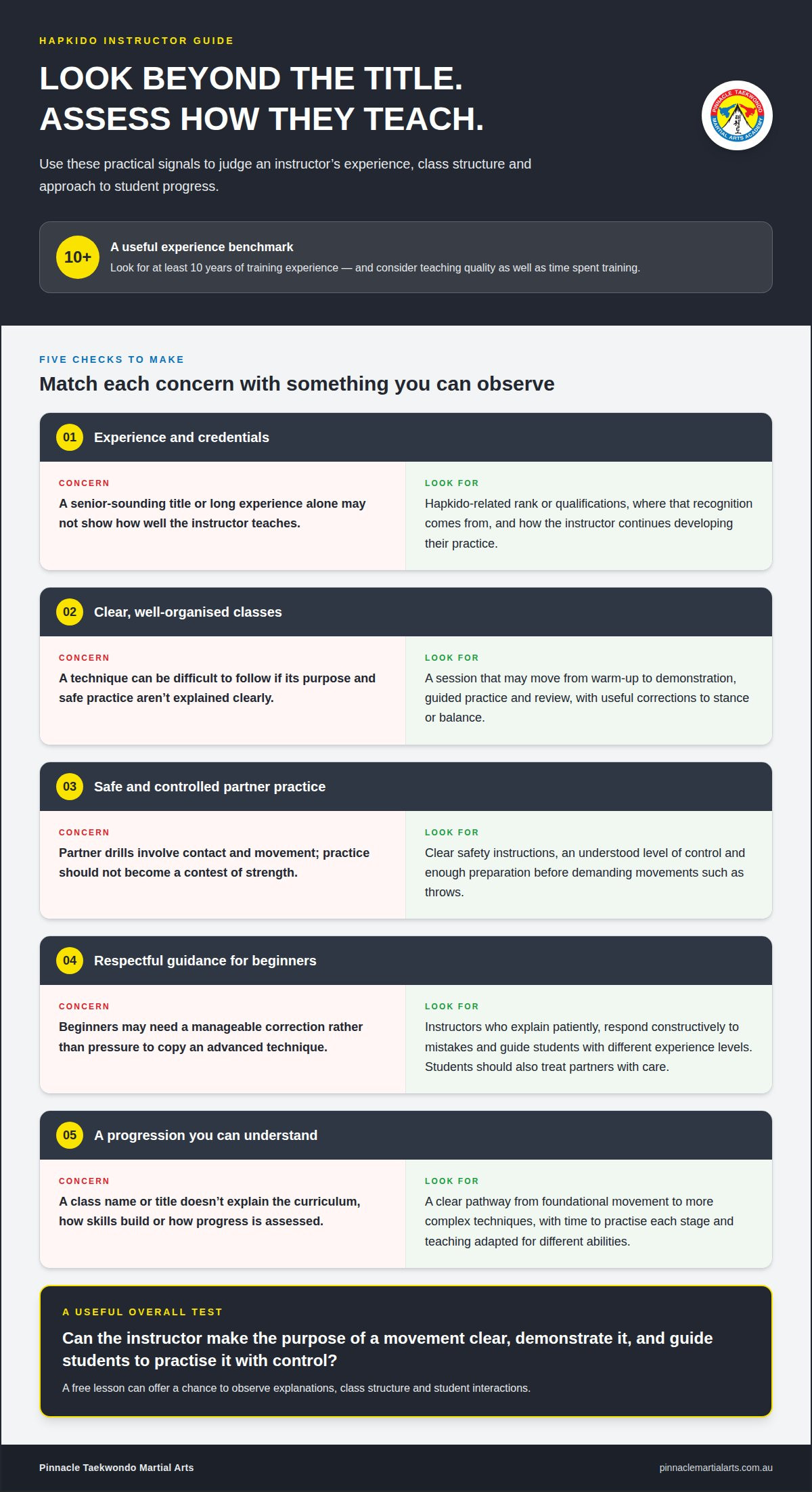
For Hapkido classes in Sydney, look for an instructor with substantial training experience, a clear curriculum and respectful teaching habits. A useful benchmark is at least 10 years of training experience. Experience alone isn’t a complete measure, so consider how the instructor explains techniques, adapts guidance and manages partner practice. Ask how beginners are taught to progress from basic movement to more demanding skills.
Credentials should relate directly to Hapkido and the instructor’s role. Find out what rank or qualifications they hold, where that recognition comes from, and how they continue developing their martial art practice. A title such as “master” can indicate seniority, but it doesn’t explain how classes are taught. Look for demonstrations and explanations that make the purpose of each movement clear. Strength matters, but controlled technique and sound instruction matter too.
Notice how the instructor structures a class. A well-organised session might move from a warm-up to a demonstrated technique, guided practice and a review. Look for useful corrections, such as adjusting stance or maintaining balance during a partner drill. The instructor should explain how to practise safely and make sure students understand the expected level of control before working with a partner.
Respect should be visible in everyday interactions. Notice how instructors speak to beginners, respond to mistakes and guide students with different experience levels. A new student struggling with footwork, for example, should receive a clear, manageable correction rather than pressure to copy an advanced technique. Students should also listen, follow instructions and treat training partners with care.
Ask how the curriculum develops over time. A clear pathway connects foundational movement with more complex techniques, while giving students time to practise each stage. Find out how progress is assessed and how teaching is adapted for different abilities. These details help show whether classes are planned and structured. A free lesson can also give you a chance to observe the instructor’s explanations, class structure and student interactions before deciding whether the school suits your goals.
Hapkido classes for children, youth and adults
Age-appropriate training helps students build coordination, discipline and confidence at a suitable pace. Teen martial arts programs are described for ages 12-16, while adult classes generally serve people aged 18 and older. Beginners can start with basic movement and partner awareness before progressing to more complex practice. For children, structured activities and clear instructions help make each session easier to follow. For adults, classes can develop practical skills while building fitness and control.
For CBD and major-suburb access, Sydney training locations include Marrickville, Chester Hill, Earlwood, Penrith, Bankstown and Caddens. Which location is closest depends on your starting point and travel route, so use your suburb as the first filter.
Sydney schools may teach different Hapkido lineages and follow different organisational affiliations. The class name alone doesn’t identify a particular style or governing body. Ask which curriculum guides the sessions and how students progress through it. A clear explanation should connect class content with practical examples, such as movement, partner drills and self-defence practice.
Look for a class structure that suits the student, not just the timetable. A teenager may benefit from age-appropriate partner exercises and clear expectations around discipline. An adult beginner may prefer step-by-step instruction, with time to practise each movement before adding speed or complexity. For a child, notice whether activities are explained simply and instructors guide students through each stage. These details show how training can suit different ages and experience levels.
Before choosing, compare the class format with the student’s goals: confidence, fitness, self-defence or a regular martial arts routine. Consider travel, age group and how the curriculum introduces techniques. If you’re looking for structured practice in Sydney, explore Hapkido training options and consider which class best suits your age and experience.
Self-defence skills and techniques
Hapkido self-defence combines joint locks, throws, strikes and defences. Training also develops awareness of distance, direction and changes in another person’s movement. Rather than relying purely on strength, practitioners learn to redirect an opponent’s force. For example, a movement may guide pressure away from the body before a student practises a controlled response. Each technique calls for timing, balance and attention, not just physical power.
Joint locks and throws require control because they involve partner contact and movement. Students should learn each movement slowly, understand their partner’s role and follow the instructor’s directions. A throw, for instance, needs careful preparation and enough space. Strikes and blocks also require clear targets and controlled force during practice. These fundamentals help students focus on technique rather than turning drills into contests of strength.
You don’t need an advanced fitness level to begin; students can build conditioning as they learn. A beginner might first practise stance, stepping and balance, then add a simple partner drill. Repeated movement can challenge coordination and general fitness, while learning a sequence engages the mind. Progress comes from practising with focus and control, not trying to match an experienced student’s pace.
Self-defence also involves choices before physical techniques become necessary. Awareness can mean noticing changes in distance, keeping an exit in view and responding early to an uncomfortable situation. In class, a student might practise moving out of a partner’s line and regaining balance before attempting a technique. This makes prevention and positioning part of training, alongside locks, throws and strikes.
Hapkido’s physical and mental demands develop together. A controlled drill asks students to remember a sequence, read movement and adjust their balance. The aim is to practise deliberate responses, not to promise a particular outcome in every real situation. Strong fundamentals give beginners a foundation for developing self-defence skills with discipline and care.
Beginner classes and foundational techniques
A beginner’s first Hapkido class should build understanding before complexity. Training can start with posture, foot placement and stepping, then connect those movements into a simple sequence. For example, a student may practise shifting their weight while keeping a stable stance. These basics develop balance and confidence, giving each technique a practical starting point.
Next, students can learn how distance and direction affect a movement. A partner drill might involve stepping off line, turning the body and returning to a balanced position. The aim is to understand how each action connects, not to move quickly. Instructors can break techniques into manageable stages, then help beginners practise each part with control and respect for their partner.
Foundational martial arts training also involves listening and responding to instruction. A beginner might watch a demonstration, practise the movement slowly, then repeat it with a partner. This sequence helps students notice details such as hand placement, posture and timing. Asking to see a movement demonstrated again is a practical way to improve accuracy and build confidence.
For a first session, wear comfortable clothing that allows free movement. Follow the class’s guidance on uniform and equipment before buying anything. As training develops, suitable martial arts equipment and uniforms can support regular practice. Respect matters from the first class: listen to instructions, take turns and use controlled movements during partner exercises.
Progress comes from practising fundamentals consistently, not rushing towards advanced techniques. Repeating a basic step with balance and control builds a stronger base for later learning. Instructors can then connect that movement to more involved techniques. Each stage gives beginners a clear skill to practise and a practical way to recognise improvement.
Ready to build your foundations through beginner Hapkido training? Start with the basics, practise with focus and let confidence grow through each class.
Pinnacle Taekwondo Martial Arts: Hapkido classes
Pinnacle Taekwondo Martial Arts offers Hapkido classes for people ready to develop practical skills, discipline and confidence through structured training. Whether you’re new to martial arts or building on existing experience, classes provide a place to work on movement, technique and self-defence fundamentals.
For families, age-specific Kids Martial Arts programmes give children structured training to develop coordination, focus and respect. Kids Kung Fu and Kids Self Defence offer further options for children interested in martial arts or practical safety skills. Choose a starting point that suits the student’s age, interests and experience.
Choose Hapkido if you want to practise its combination of movement and self-defence techniques. Choose a children’s programme for age-appropriate martial arts training for your child. Both options support steady learning through practice and guidance.
Contact Pinnacle Taekwondo Martial Arts to discuss which class may suit you or your child.
Take your next step with confidence
Starting a martial art is a chance to set a personal direction, not just learn movements. Think about what you want training to add to your routine: greater confidence, a new challenge or a shared activity for your family. A clear goal can help you choose a class and stay focused as you begin.
Choosing Hapkido classes in Sydney gives you a practical way to work towards your goals through steady practice. You don’t need to have everything figured out before taking the next step. Bring your questions, share what you hope to achieve and start a conversation about training that suits you or your child.
Contact Pinnacle Taekwondo Martial Arts to discuss a suitable starting point. Every strong journey begins with a decision to show up, learn and keep moving forward.
Frequently Asked Questions
Where can I find Hapkido classes in Sydney, NSW?
Hapkido classes in Sydney are available through Pinnacle Taekwondo Martial Arts across Marrickville, Inner West, Earlwood Canterbury area, Chester Hill Bankstown area South West & Penrith area Western Sydney. Caddens is also among the areas served. Choose a location that fits your regular travel route, then consider how training could fit around work, school or family commitments.
What are the class times and age groups for Hapkido classes in Sydney?
Programmes are grouped by age: MINI RANGERS (3-6 years), MARTIAL RANGERS (7-12 years), TEEN’S MARTIAL ARTS (13-18 years) and ADULT’S MARTIAL ARTS (age 18+). For Hapkido classes in Sydney, class times depend on the programme timetable. Identify the student’s age group, then use the current session booking details to find a suitable time.
How much do Hapkido classes in Sydney cost, including trial classes and membership fees?
Pricing information varies by location and programme, but a free trial is often available to help you get started. The trial is described as “book your one free lesson now!” Use the lesson to experience a class before deciding whether ongoing training suits your goals. No other class or membership price is quoted here.
Do Sydney Hapkido schools offer beginner classes or classes for children?
Yes. Beginners can start with foundational training and develop at a manageable pace. Children can join age-specific programmes such as Kids Martial Arts, Kids Kung Fu and Kids Self Defence. A parent seeking structured practice focussed on confidence and practical skills can consider children’s self-defence training, while an adult beginner can start with basic movement and technique.
How can I book a trial Hapkido class in Sydney?
Use the booking option to “book your one free lesson now!” Choose the student’s age group and a class that matches their interest, then follow the booking steps. Before attending, wear comfortable clothing that allows movement. A trial gives beginners and families a practical first look at the training environment and helps them approach their next class with confidence.