 0410 686 585

Beginners don’t always need a class set aside just for them. Kickboxing classes in Sydney can welcome newcomers in dedicated or mixed-level groups, where skills build from the fundamentals. Look for clear coaching, useful progressions and the chance to work at your own pace. You don’t need to arrive already fit or experienced.
A beginners-only class can help, but it isn’t the only workable format. In a mixed-level class, structured instruction and adaptable drills let people develop alongside students with different experience. Whether you’re looking for a challenging workout, a new skill or a confidence-building activity for your family, it helps to know what training involves. This article explains how kickboxing supports fitness and conditioning, how classes can suit different ages and abilities, and what to expect from coaching and sessions. You’ll get a practical picture of the training to help you choose a purposeful, welcoming starting point.
Key Takeaways
- See how punch-and-kick drills can build fitness and conditioning, and what to consider if weight loss is one of your goals.
- Learn how training can be adapted to different ages, experience levels and abilities, so you can find a suitable starting point.
- Understand what clear coaching and skill progression can look like in class, and what to look for as you develop technique.
- Get a practical sense of what shapes class length and membership costs, without relying on a one-size-fits-all estimate.
Fitness, weight loss and conditioning
Kickboxing classes in Sydney combine technique practice with demanding movement. A typical drill might pair punches, kicks, footwork and short recovery periods. Repeating these actions challenges cardiovascular fitness while developing coordination, balance and muscular endurance. Progress comes from consistent practice and controlled technique, not simply hitting harder.
Kickboxing focuses mainly on punches and kicks drawn from Western boxing and Muay Thai. Boxing centres on punches, while Muay Thai also uses knees and elbows. Cardio kickboxing usually prioritises continuous fitness drills over learning a broader set of combat skills. K1 blends kickboxing, Muay Thai, Karate and Savate, and allows knees, elbows and throws.
Classes in Sydney can vary in emphasis: some focus on conditioning, while others prioritise technique, fitness or practical self-defence skills. For weight management, kickboxing can form one part of a routine alongside regular activity and balanced eating. It can’t guarantee weight loss; your overall habits and consistency matter. Ask about the class structure so you know whether it prioritises drills, fitness or skill development.
Pinnacle Taekwondo Martial Arts serves Sydney’s Marrickville, Inner West, Earlwood Canterbury area, Chester Hill Bankstown area South West & Penrith area Western Sydney. Choose a convenient location to make regular attendance practical. Consistent training helps you practise combinations, build control and develop confidence through repeated skill work. Self-defence training develops awareness and physical skills, but isn’t a guarantee of safety.
Kickboxing is one option among Sydney fitness activities. You could also run along a local route, swim, cycle or train at a gym. To compare options, consider what you want from each session: kickboxing combines striking drills with movement, while a run focuses on continuous cardio. Identify your priority, such as conditioning, learning technique or practising self-defence, then look for a class whose focus and location fit your routine.
Training for different ages and ability levels
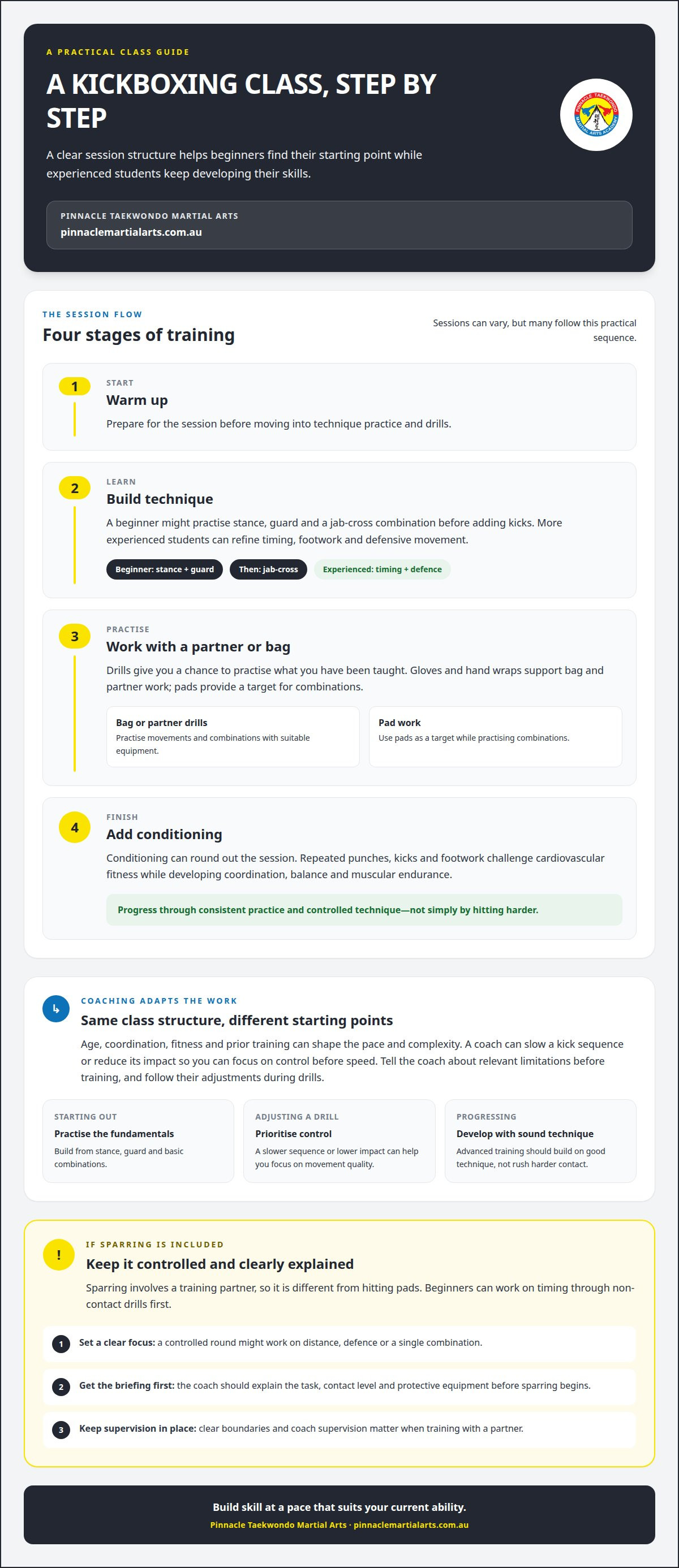
A useful class gives beginners a clear entry point without treating every student alike. A new participant might practise stance, guard and a jab-cross combination before adding kicks. Experienced students can refine timing, footwork and defensive movement. Age, coordination, fitness and prior training all shape the pace and complexity of a workout.
Many sessions follow a practical sequence: warm-up, technique instruction, partner or bag drills, then conditioning. Gloves and hand wraps support bag and partner work; pads give students a target for combinations. The coach can adjust a drill, for example by slowing a kick sequence or reducing its impact, so participants focus on control before speed.
Strength training can complement boxing and kickboxing, but it doesn’t need to dominate the week. Bodyweight squats, push-ups and controlled core exercises can support balance and striking posture. A student building towards competition may add more structured conditioning as skills develop. Advanced training should build on sound technique, not rush students into harder contact.
Sparring is different from hitting pads. It involves a training partner, so clear boundaries and coach supervision matter. Controlled rounds can focus on distance, defence or a single combination, rather than full-power exchanges. Beginners can develop timing through non-contact drills first. If sparring is part of a session, the coach should explain the task, contact level and protective equipment before it begins.
For children, adults returning to exercise and advanced students, instruction should match the person’s current capability. Tell the coach about relevant limitations before training, then follow their adjustments during drills. Progress may mean keeping balance through a kick, remembering a combination or moving with better control. If you want structured skill practice, explore kickboxing classes as one way to start building your training routine.
Coaches and instructor experience
A capable martial arts coach turns technique into clear, repeatable steps. Notice how they demonstrate a movement, explain its purpose and correct posture. For example, a beginner learning a jab should receive guidance on stance, guard, alignment and safely returning the hand. Specific feedback helps students understand what to practise next, rather than simply repeating a combination.
When exploring combat sports coaching, focus on what the class teaches, not just a name you may encounter, such as Anthony Perosh. Does the coach break down skills, adapt explanations for beginners and keep drills purposeful? Useful coaching connects each movement to a training goal, such as balance, accuracy or defensive awareness.
Personalised coaching adapts instruction to a student’s experience and goals. A beginner might need time to practise footwork before adding a kick. Someone returning to training may benefit from rebuilding movement control before increasing intensity. A coach can offer a simpler version of a drill, then progress it as technique and strength develop.
Private one-to-one coaching offers a focused setting for individual goals. A session might concentrate on refining a lead hook, improving balance during kicks or building confidence with basic combinations. The coach can observe each repetition closely and adjust the next task. This format suits someone who values direct feedback, while group classes provide shared practice and partner drills.
To make coaching productive, arrive ready to describe your experience and training aims. Follow the coach’s demonstrations, ask for clarification when a movement feels unclear and apply one correction at a time. For example, improve your guard position first, then work on speed. This steady approach helps beginners build sound habits and gives experienced students a clear focus for continued development.
How long is a typical class?
Class length depends on the gym’s session format and training focus. A session may move from preparation into technique practice, pad or bag drills, conditioning and a cool-down. Each stage serves a purpose, so the pace can feel different during fundamentals practice than during a high-energy final drill. Ask how the session is structured before planning it around work, school or travel.
Sydney kickboxing gyms set class times according to their own timetables and programs. Some sessions may suit before-work training, while others fit after-school or evening routines. Choose a regular slot that works with your weekly commitments. Consistency is easier when travel time, family responsibilities and recovery all fit into the plan.
Membership options can vary by training frequency, class access and membership terms. These factors also shape the cost, so compare what each option covers against how often you expect to attend. The price depends on the case and is given after a quote request. Introductory sessions, where offered, can help you experience the teaching style before deciding on ongoing training.
To book a trial class where available, use the gym’s booking process and share your experience level and goals. Expect a coach to introduce the class format, guide you through basic movements and explain how to take part. For example, a beginner might start with stance and simple combinations before joining more demanding drills. Wear comfortable training clothes and follow the coach’s directions.
Before choosing a membership, consider how often you can realistically attend and whether the timetable supports that routine. A student balancing work and family may prefer a different schedule from someone training several times each week. If you’re ready to explore class options and request a quote, view kickboxing class information and take the next step towards structured training.
Pinnacle Taekwondo Martial Arts: Kickboxing classes
Pinnacle Taekwondo Martial Arts offers kickboxing classes for people ready to build fitness while learning practical striking skills. The classes combine conditioning and technique practice in structured training. Start with your goals, whether you’re developing a new routine, improving coordination or building confidence through martial arts.
Families can also explore Kids Martial Arts, Kids Kung Fu and Kids Self Defence. These options give children ways to practise movement, discipline and foundational skills in a structured setting. Choose the class that best matches what you or your child hopes to develop, then take the next step at a comfortable pace.
For training that supports fitness and skill development, contact Pinnacle Taekwondo Martial Arts to discuss your goals and class options.
Choose a goal and take your next step
Your next step doesn’t need to be a major commitment. Start with the skill or habit you want to develop, then choose a routine that fits everyday life. If you’re considering kickboxing classes in Sydney, focus on finding a clear starting point and building consistency at your own pace.
For families, Pinnacle Taekwondo Martial Arts also offers Kids Martial Arts, Kids Kung Fu and Kids Self Defence. These programs give children different pathways to develop practical skills and personal discipline. Choose the direction that best matches your child’s interests and the qualities you hope they’ll practise.
Training is a chance to keep learning, one class at a time. Contact Pinnacle Taekwondo Martial Arts to discuss your goals and explore a suitable next step. Contact Pinnacle Taekwondo Martial Arts and take that first step towards purposeful training.
Frequently Asked Questions
Do you have separate classes for beginners?
Beginners can start with structured instruction and learn movements progressively. A beginner-only class isn’t necessary: foundational skills include stance, guard and simple combinations. Tell the instructor you’re new before training so they understand your experience level and can guide your starting point. Focus on control first, then build speed and complexity as the movements become more familiar.
Do you offer free trials?
Yes, you can book your one free lesson now! Use the lesson to experience the training environment and decide whether the class suits your goals. Before arriving, consider what you want to learn, such as basic striking technique, fitness or a regular activity. Let the instructor know if you’re new so you can approach the session with a clear starting point.
What age groups do you cater to?
Programs cater to children from age 3 and up, teens and adults. The age-specific groups are MINI RANGERS (3-6 years), MARTIAL RANGERS (7-12 years), TEEN’S MARTIAL ARTS (13-18 years) and ADULT’S MARTIAL ARTS (age 18+). For a child, choose the group matching their age and interests. Teens and adults can select training suited to their own goals.
What is K1 & Kickboxing?
Kickboxing centres on punches and kicks drawn from Western boxing and Muay Thai. K1 combines elements of kickboxing, Muay Thai, Karate and Savate. Its permitted techniques also include knees, elbows and throws. That means the formats aren’t identical: if you’re interested in a particular style, ask what techniques your session practises and whether it focuses on fitness drills, skill development or both.
Do Sydney kickboxing gyms offer beginner, kids, women-only, or fitness classes?
Class formats vary across Sydney, so the right option depends on your age and training aims. Pinnacle Taekwondo Martial Arts offers kickboxing classes and fitness sessions, alongside children’s programs including Kids Martial Arts, Kids Kung Fu and Kids Self Defence. A women-only format is a separate class type; choose a program based on its audience and training focus rather than assuming every gym offers the same options.
What should beginners bring and wear to a kickboxing class?
Wear comfortable clothing that lets you move freely, and bring water for your session. Arrive ready to listen and follow the coach’s guidance on equipment before drills begin. Beginners don’t need to master combinations in advance; focus on learning movements safely and ask for clarification if a technique feels unfamiliar. Pinnacle Taekwondo Martial Arts also offers martial arts equipment and uniforms.