 0410 686 585

Respect and self-defence belong together. In Martial arts in Bankstown, parents can watch when the class arrangements allow it, with the lesson format and observation space shaping where they can sit. A first lesson is a chance to see how beginners are guided through movement, listening and basic skills.
It’s natural to want your child to feel safe, included and encouraged, not pressured to keep up. Structured martial arts training gives children opportunities to practise coordination, focus and respect while building confidence and self-defence skills. Progress comes through steady practice, not instant results.
This guide explains what to expect at a first lesson, what to bring and how parent observation may work. You’ll also learn how martial arts can suit children and adults, what to consider when choosing a class, and how to find a training approach that supports confidence, discipline and practical skills.
Key Takeaways
- Prepare for a first class by bringing a water bottle and finding out how adult participation and parent observation fit the lesson.
- Consider how a structured class and an appropriate training level may suit your child’s needs, including when ADHD is part of the picture.
- Look for activities that let students practise balance, timing and controlled movement as they develop coordination.
- Explore how consistent training can help children practise respectful behaviour and learn practical self-defence skills.
What do I need to bring to my first lesson?
Start with a water bottle. Integrated Combat Centre recommends bringing one to martial arts classes. Wear comfortable clothes that allow you to move freely, and arrive ready to follow the instructor’s directions. If the class requires a uniform or other equipment, the club’s instructions will guide what to bring.
Bankstown classes may cover Taekwondo, Karate, Kung Fu, Self Defence, Kickboxing and Hapkido. Brazilian Jiu-Jitsu and boxing are distinct disciplines, so class format and availability depend on the club. Ask about the lesson structure before choosing, especially if you’re comparing grappling, striking or practical self-defence.
For adults, a first class is a chance to learn the basic movements and understand how instruction works. A parent and child can also attend classes at the same club, where suitable timetables allow. Family participation doesn’t necessarily mean training together; adults and children may have separate groups, activities and class expectations.
Before class, think about practical questions such as what to wear, how the lesson is organised and where parents can observe. Follow the instructor’s directions so you understand the training space and class routine before taking part.
When choosing a class, consider the discipline, age group and style of instruction that suit your goals. Pinnacle Taekwondo Martial Arts offers age-specific programmes and a blend of disciplines, so you can compare the focus of each class and choose an appropriate starting point.
Pinnacle Taekwondo Martial Arts offers Kickboxing and Boxing alongside other martial arts classes. Choose a class based on the skills you want to practise, your experience and the programme that suits your age, then bring a water bottle and follow the instructor’s guidance.
My Child Has ADHD, Will Martial Arts Help?
A martial arts class isn’t a treatment for ADHD. It can give a child a chance to practise following a cue, waiting for a turn and repeating a movement. Whether that experience suits your child depends on their needs and how they respond to the class structure.
Beginner, intermediate and advanced classes describe different experience levels, not a child’s ability to manage ADHD. A beginner can focus on learning simple movements and class routines. As skills develop, instructors can introduce more complex sequences. Choose a level based on experience, confidence and readiness to follow group directions.
For a preschool-age child, look at how activities are explained and paced. Short instructions, demonstrations and clear transitions can make a class easier to follow. Ask about the lesson structure and whether parents can observe, then consider how your child responds to the environment.
Bankstown has martial arts options across styles such as Taekwondo, Karate, Kung Fu, Kickboxing, Hapkido and self-defence. PCYC Bankstown is at 55 Meredith Street, Bankstown, NSW 2200. That address identifies the centre, so confirm the class venue before planning a visit. Viet Quyen Dao junior classes are another named option to compare by style and teaching approach.
For public transport, enter the exact class venue into a trip planner and choose a route that suits your family. Parking depends on the venue; the PCYC Bankstown street address alone doesn’t establish whether parking is available.
A first lesson can help you see the teaching style and how your child responds to the class. Watch for clear instruction, structured activities and a welcoming pace. Pinnacle Taekwondo Martial Arts invites families to book your one free lesson now! and experience a class firsthand.
Compare class structure and suitable martial arts training before deciding what best fits your child.
Physical coordination and motor skills
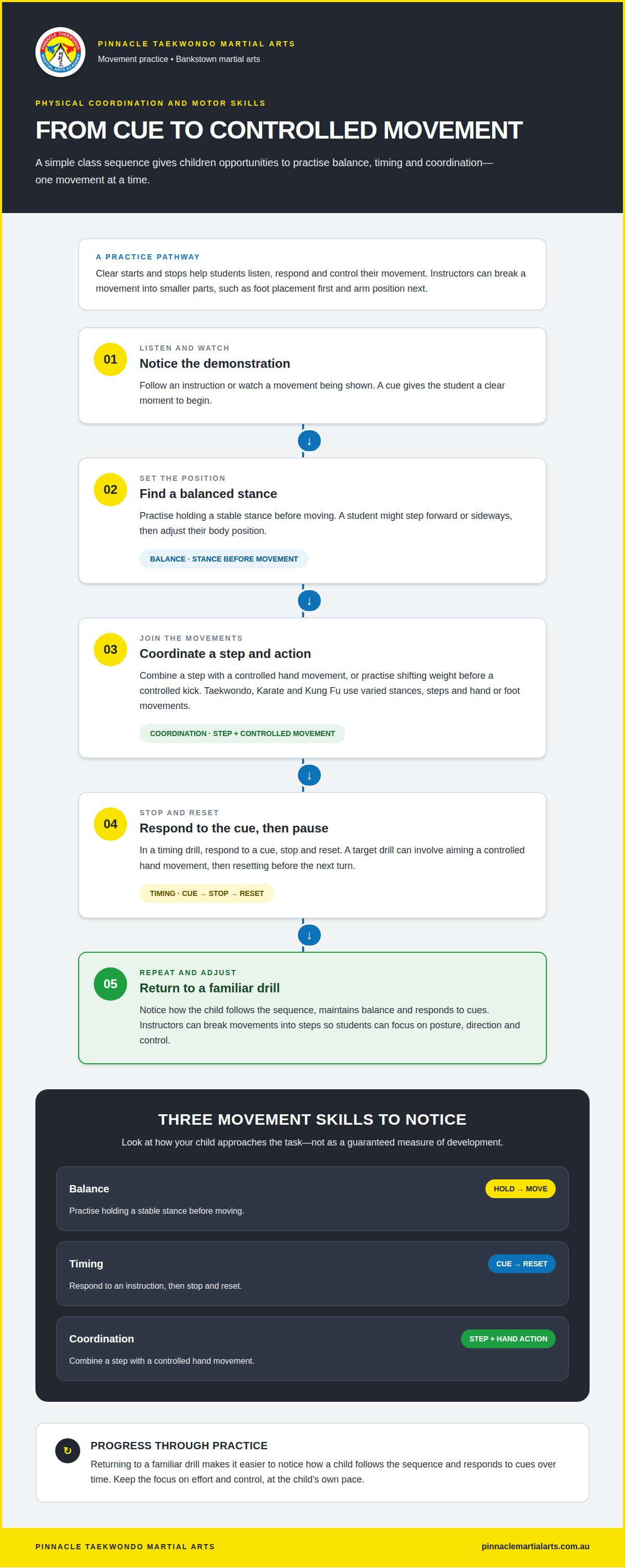
Martial arts in Bankstown give children structured opportunities to practise coordination, balance and control. A simple sequence might involve stepping forward, raising a guard and returning to stance. Repeating movements helps students notice their body position and adjust with each attempt.
Different drills practise different kinds of movement. Following an instruction to step sideways and change stance, for example, asks a child to listen, respond and control their body. A target drill can involve aiming a controlled hand movement, then resetting before the next turn. Clear starts and stops help students practise timing and awareness.
Taekwondo, Karate and Kung Fu use varied stances, steps and hand or foot movements. A student might practise shifting weight before a controlled kick, then moving into a balanced stance. Careful repetition lets a child focus on posture, direction and control while learning each movement.
- Balance: practise holding a stable stance before moving.
- Timing: respond to a cue, then stop and reset.
- Coordination: combine a step with a controlled hand movement.
Look for practical signs of engagement during class. Does your child watch a demonstration, attempt the sequence and adjust after instruction? These moments show how they’re approaching the task, not a guaranteed measure of development. Instructors can break a movement into steps, such as foot placement first and arm position next.
Progress is easier to notice when a child returns to a familiar drill. Consider how they follow the sequence, maintain balance and respond to cues over time. In Bankstown martial arts classes, keeping the focus on effort and control gives children room to build movement skills at their own pace, without comparing one student with another.
Respect and self-defence
Respect is part of practical self-defence. Students learn to listen to instructions, control their movements and recognise another person’s boundaries. Waiting for a partner’s signal before practising a technique, for example, shows discipline and helps keep training purposeful. These habits matter beyond the training floor, too.
Self-defence starts with awareness and choices, not a dramatic move. A lesson might cover noticing uncomfortable behaviour, creating distance and seeking help from a trusted adult. A child could move towards a teacher or parent rather than staying in a confrontation. Clear, simple actions give them a plan to practise.
- Notice: pay attention to people, surroundings and changes in behaviour.
- Create space: step away and use a clear voice when appropriate.
- Get help: move towards a trusted adult or safer public place.
In class, instructors teach controlled movements through demonstrations and partner drills. Students practise following cues, keeping their actions measured and stopping when asked. Self-defence training should build judgement, not encourage someone to start or escalate a conflict. Progress includes knowing when not to engage.
Parents can reinforce the lesson with everyday examples. Talk through what your child could do if someone ignores a boundary at school or in a public place. Emphasise leaving, finding a trusted adult and explaining what happened. Training supports practice, while family conversations help children connect those skills to real situations.
For adults, the same principles apply: awareness, controlled responses and sound decisions. A suitable class should explain how techniques fit into safe practice and respectful partner work. Consider how lessons balance physical skills with awareness and decision-making, and whether that approach matches your goals.
Explore self-defence training to build practical skills alongside respect and personal responsibility.
Pinnacle Taekwondo Martial Arts: Kids Martial Arts
Pinnacle Taekwondo Martial Arts offers Kids Martial Arts for families seeking structured training that builds skills through practice. If your child is ready to explore movement, discipline and confidence, consider a class that matches their interests and starting point.
Choose from Kids Taekwondo, Kids Kung Fu or Kids Self Defence. Each offers a different focus, from learning martial arts movements to practising awareness and personal boundaries. Talk with your child about what they’d like to try. A child who enjoys set movement patterns may prefer Taekwondo, while another may be drawn to Kung Fu or practical self-defence.
Use the questions in this guide to decide what matters most: class structure, parent observation, movement practice or respectful self-defence. Visit pinnaclemartialarts.com.au to explore the kids’ class options and take the next step when your family is ready.
Take the next step with confidence
Choosing martial arts in Bankstown can be the start of a steady journey in confidence, discipline and personal growth. Let your child help choose a class that feels meaningful, then take the first step together. A shared goal can make training a positive part of family life.
Pinnacle Taekwondo Martial Arts offers Kids Martial Arts, Kids Kung Fu and Kids Self Defence. These options give families different ways to begin, whether a child is drawn to structured movements or practical awareness. Think about what would motivate your child and use it as a starting point for your conversation.
Ready to explore the next step? Contact Pinnacle Taekwondo Martial Arts to discuss the kids’ training options. Every student starts somewhere. Help your child take that first step with purpose.
Frequently Asked Questions
Are Parents Allowed to Watch?
Parent viewing depends on the class setup and the space available. If you’re observing, stay in the designated area and avoid calling instructions across the training floor. Your child can focus on the instructor’s cues while you see how the class runs. If your child looks over for reassurance, a calm smile is more helpful than stepping into the activity.
Will My Child Become A Bully?
No martial arts class can determine a child’s behaviour, but training can reinforce respect, self-control and responsibility. Students practise following instructions, working carefully with a partner and stopping when directed. Keep discussing how those choices apply at school and with friends. Strength means making safe decisions, not using physical skills to intimidate or hurt others.
Do I Need To Be Fit For This?
No, you don’t need to arrive already fit. Beginners can learn the class routine and practise movements at a manageable pace. Focus on following a basic stance or stepping pattern before trying to increase speed. Regular participation builds familiarity with the activities. Choose a class that suits your experience and tell the instructor if you need movement adjustments.
Do Parents Need To Stay?
Whether a parent needs to stay depends on the class’s supervision arrangements and the child’s age. Follow the instructions given for that session, rather than assuming every class has the same drop-off rules. If you’re waiting nearby, plan where you’ll be and when your child should meet you afterwards. A clear handover routine helps children know what to expect before training begins.
How Long Until I Get My Black Belt?
There isn’t one reliable timeframe for earning a black belt. Progress depends on the martial art, grading requirements, consistent attendance and how well a student demonstrates each skill. A belt is a milestone, not a shortcut or a guarantee of ability in every situation. Focus on steady improvement and ask how students learn techniques and show progress between gradings.
I’m Not Very Sporty or Coordinated, Will That Be A Problem?
No, you don’t need to be sporty or coordinated to start. Instructors can teach movements in manageable steps, such as practising foot placement before adding a hand technique. Focus on understanding each instruction and repeating it with control. You don’t need to match another student’s pace. Beginners can learn the movements and build confidence through practice.