 0410 686 585

Karate classes in Marrickville give kids, teens and adults a structured way to develop skills, fitness and confidence. At Pinnacle Taekwondo Martial Arts, Karate is taught alongside Taekwondo, Kung Fu, Kickboxing, Hapkido and practical self-defence. Age-specific programs give beginners a clear starting point and help students keep progressing.
Choosing a martial art is about more than learning techniques. Look for training that develops focus, respect and resilience, with an age-appropriate pathway and clear progression. This guide explains the class options in Marrickville, what students can develop through regular practice and how belt gradings fit into training. It also compares Karate with other disciplines to help you choose a suitable class for yourself or your family.
Key Takeaways
- Compare age-based class pathways to find a suitable starting point for a child, teen or adult.
- Look for training that builds focus, respect and confidence alongside physical skills.
- Use belt gradings to understand how students track progress and work towards new goals.
- Explore karate alongside other martial arts, with kids’ options including Kung Fu, Taekwondo and self-defence.
Programs for children from age three, teens and adults
A Marrickville martial arts curriculum can start at age three, with pathways for children, teens and adults. There’s no single entry rule shared by every dojo; for children, safe training means clear instructor guidance, controlled practice and movements suited to their readiness.
Classes by age group
Preschool programs introduce martial arts through simple instructions, basic movement and short practice sequences. A local curriculum can begin at age three, while older children can build skills through more involved drills as they develop. Teens may value training that challenges their fitness and technique. Adults can also begin karate, whether they’re learning foundational movements or refining existing skills. When comparing age groups, look for a class pace that allows students to understand instructions, practise safely and progress without being rushed.
Children’s confidence and coordination
Karate gives children practical ways to practise balance, timing and coordinated movement. Following a sequence of steps and hand techniques, for example, asks a student to listen, remember and move with control. Repeating a skill helps children notice their progress and can support confidence. Classes also offer chances to practise focus and persistence: a child tries a movement, receives guidance and works through it again. This connects physical fitness with personal development.
Age requirements and class safety
Age requirements differ between dojos, so the key local detail is whether a program accepts preschool children from age three. Children starting karate may face ordinary physical-training risks, including bumps, falls or strain from movements beyond their current ability. Clear instructions, controlled partner practice and suitable pacing help manage those risks. Parents can look for a class where children are shown how to begin and stop an exercise, follow boundaries and practise techniques with care. For a young beginner, readiness to listen and follow simple directions matters alongside age.
Character development, discipline and confidence
Karate practice connects physical effort to everyday habits. In class, a student may warm up, follow a technique sequence, then practise control with a partner. That structure gives fitness a purpose: repeat movements accurately, listen to instructions and complete the task. Each step is a chance to practise patience, attention and respect, as well as strength.
Confidence can grow through manageable challenges. A student might learn a stance, practise it several times, then link it to a simple movement. Instructors guide learning with clear feedback and recognition of effort. Progress comes from taking on the next task, not comparing ability with another student. This experience can help children and adults see how practice supports improvement.
Discipline becomes practical when students follow class routines. They arrive prepared, listen to instructions, take turns and apply techniques with control. Waiting for a partner’s turn, for example, practises patience, while repeating a movement develops concentration. These small actions support character development as students practise respect and responsibility alongside physical skills.
Focus also has a physical side. A sequence combining a step, a turn and a hand technique asks students to remember instructions while coordinating movement. Repeating it develops fitness and attention together. Students learn to pause, reset their stance and try again when a movement feels unfamiliar. Over time, that process can make effort feel purposeful and build confidence.
Look for classes where instructors explain the goal of an exercise, demonstrate it clearly and give students time to practise. A supportive learning environment balances effort with control, so students can work steadily without being pushed to copy someone else’s pace. For readers seeking structured movement alongside martial arts, fitness training options can be part of the wider picture.
Belt rankings, gradings and black-belt progression
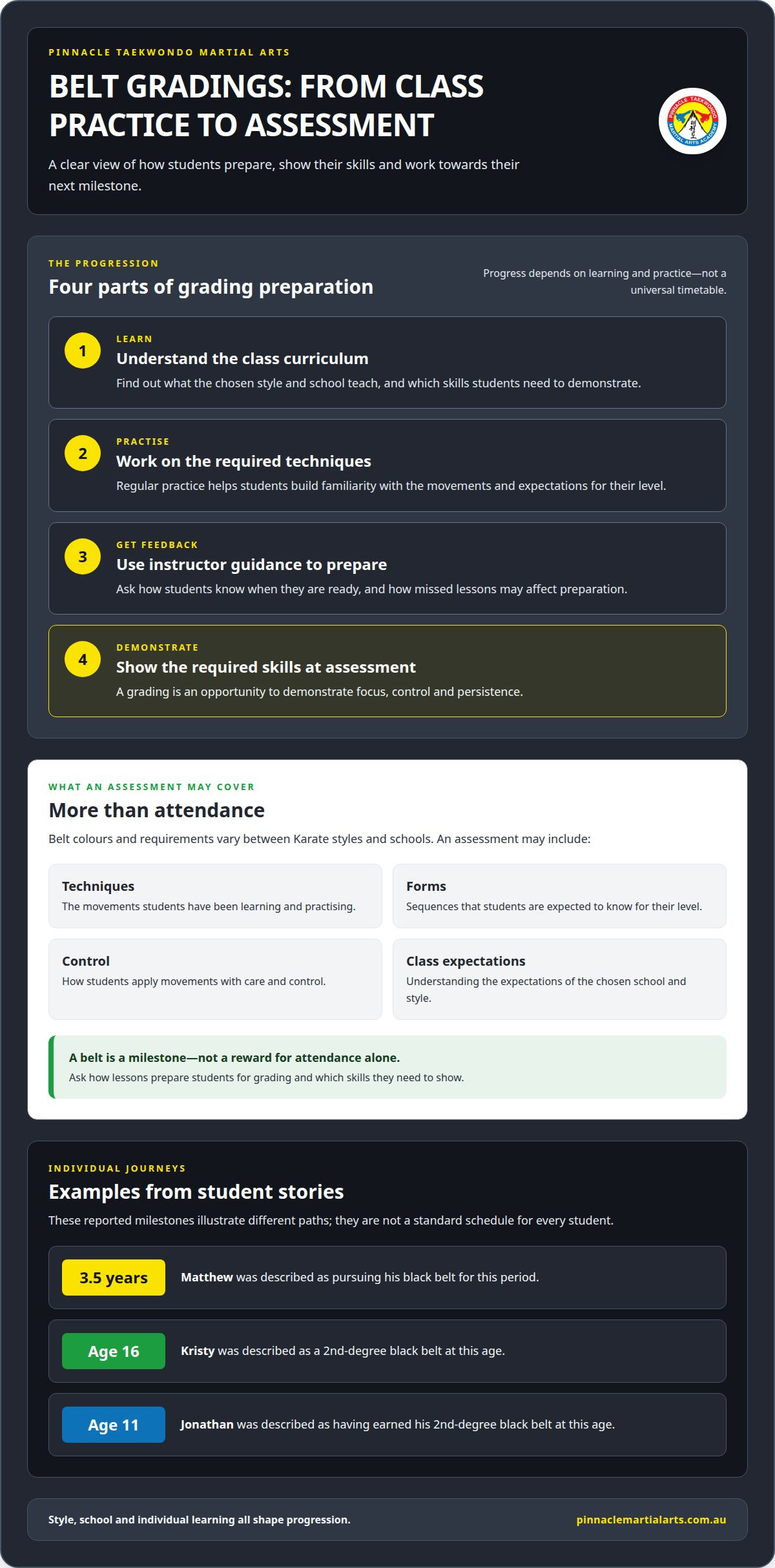
Belt gradings give students visible milestones, but colours and requirements vary between Karate styles and schools. An assessment may cover techniques, forms, control and understanding of class expectations. Ask how lessons prepare students and which skills they need to demonstrate. That makes progression clearer than treating a belt as a reward for attendance alone.
Progress depends on learning and practice, not a universal timetable. One testimonial describes Matthew pursuing his black belt for 3.5 years. Other examples show different milestones: Kristy was described as a 2nd-degree black belt at age 16, while Jonathan earned his 2nd-degree black belt at age 11. These stories illustrate individual journeys, not a standard schedule for every student.
For children, teens and adults, structured programs can set age-appropriate learning goals while keeping grading expectations tied to the chosen style. A preschool lesson might focus on following instructions and practising basic movements; an older student may work on more complex sequences. In a school setting, a group program can use shared milestones. A workplace or corporate session may focus on participation and learning rather than belt advancement, depending on its purpose.
Before starting, understand the grading process: learn the class curriculum, practise its techniques, receive instructor feedback, then demonstrate the required skills at assessment. Ask how missed lessons affect preparation and how students know when they’re ready. A positive approach treats each grading as a chance to show focus, control and persistence. A black belt is a long-term goal, not a guaranteed result or fixed timeframe.
The NSW Government Active Kids Program is described as offering an eligible school student a voucher valued up to $100 per calendar year. A testimonial says Aaron Craft was 10 years old, while Eshani’s writing skills improved over 6 months of karate classes.
Karate and mixed-discipline martial arts classes in Marrickville
Karate classes in Marrickville are one option alongside multi-discipline training in Taekwondo, Kung Fu and practical self-defence. Compare the class structure and training goals before choosing.
Class size, instructors and reviews
Class sizes, instructor numbers and reviews vary between dojos. Compare how instructors explain techniques, supervise practice and support beginners. Reviews can offer examples of student experiences, but look for repeated themes about teaching and class organisation rather than relying on one comment. Parents can also consider whether the training approach suits their child’s age, confidence and learning needs.
Timetables and class locations
Compare session times against work, school and travel routines. Nearby suburbs are around 2-5 km from Marrickville, so the venue can affect how easily students attend regularly. Timetables differ by class and discipline. Choose a location and session pattern that makes consistent training practical, rather than focusing only on the closest venue.
Multi-discipline programs offer different training emphases. Karate develops skills within its own style and progression, while Taekwondo, Kung Fu, Kickboxing and Hapkido each offer distinct ways to practise movement. Practical self-defence focuses on real-world responses. Decide whether you want to follow one discipline or explore several; respect, control and steady learning matter across styles.
For a first class, wear comfortable clothing that allows free movement and bring water. A uniform can provide suitable training wear as students settle into regular lessons. Enrolment usually involves choosing an age-appropriate class and completing its registration process. Cancellation terms depend on the enrolment agreement, so read its notice requirements before signing. To explore local martial arts options, compare Marrickville class options.
Pinnacle Taekwondo Martial Arts: Kids Martial Arts
Pinnacle Taekwondo Martial Arts offers structured kids’ programs for families choosing a martial arts pathway. Classes blend traditional and modern disciplines, with a focus on developing confidence, discipline, fitness and practical skills. Explore the options that match your child’s interests and age.
Kids Martial Arts offers a broad starting point, while Kids Kung Fu and Kids Taekwondo let children focus on different disciplines. Kids Self Defence centres on practical skills for awareness and personal safety. Consider which emphasis suits your child, whether they’re curious about martial arts or ready to explore a specific style.
These options give parents a clear next step after comparing class formats and training approaches in Marrickville. Visit pinnaclemartialarts.com.au to learn more or get in touch with Pinnacle Taekwondo Martial Arts.
Choose a first step that fits
Your next step doesn’t need to map out an entire martial arts journey. Decide what matters most now: a welcoming first experience, a new physical challenge or practical skills your child can keep developing. That priority can guide your choice among Karate classes in Marrickville and other training options.
For families considering martial arts, Pinnacle Taekwondo Martial Arts offers Kids Martial Arts, Kids Kung Fu and Kids Self Defence. Choose the kind of learning that will engage your child and help them feel ready to participate. A clear starting point makes it easier to build momentum through practice, effort and personal growth.
Take the next step when you’re ready. Contact Pinnacle Taekwondo Martial Arts to explore a suitable path for your family. Every student starts somewhere. Bring curiosity, commit to learning, and let consistent practice build confidence one class at a time.
Frequently Asked Questions
What karate classes are available in Marrickville, NSW?
Karate classes in Marrickville sit alongside Taekwondo, Kung Fu, Kickboxing, Hapkido and practical self-defence. Pinnacle Taekwondo Martial Arts teaches these disciplines to kids, teens and adults, with children’s options including Kids Karate and Kids Taekwondo. To narrow your choice, consider whether you want to focus on Karate or try a multi-discipline approach. Each offers a different way to practise martial arts.
Which karate dojos in Marrickville offer classes for children and adults?
Pinnacle Taekwondo Martial Arts offers martial arts classes for children, teens and adults, including karate. For a child, compare the class pathway with their age and interests; an adult can consider whether karate or another discipline better matches their goals. Families looking for a broader children’s pathway can also explore Kids Martial Arts, Kids Kung Fu and Kids Self Defence. These options help match training to the student.
What karate styles and skill levels are taught in Marrickville?
Pinnacle offers Japanese and Korean styles of Karate in Marrickville, alongside disciplines such as Taekwondo and Kung Fu. Students develop their skills through structured lessons and belt progression. Private one-to-one coaching can focus on skill development or belt progression. Start by deciding whether you want to learn Karate specifically or develop across more than one martial art.
Do Marrickville karate schools offer beginner classes or free trial sessions?
Beginners can start with foundational instruction, and Pinnacle Taekwondo Martial Arts offers one free lesson for prospective students. Use the session to experience the teaching, practise basic movements and decide whether the class suits your learning style. You don’t need prior martial arts experience to begin. Contact the school to arrange your free lesson and explore a suitable class.
How can you enrol in karate classes in Marrickville, and what is the cancellation policy?
Choose an age-appropriate class and complete its registration process. Cancellation terms depend on the enrolment agreement, so check its notice requirements before signing.