 0410 686 585

Can parents watch karate classes in Bankstown? It depends on the class setup, so viewing arrangements can vary between sessions. Classes run in Bankstown and across Sydney, with structured training that helps students develop fitness, focus and practical self-defence skills.
It’s natural to want reassurance that your child feels supported and knows what to expect. A welcoming class combines clear instruction with a respectful environment where students can practise at their own pace. Look for a programme that recognises steady effort, not just athletic ability.
This guide covers karate training options around Bankstown, the skills classes can develop and what to expect from belt progression and beginner training. You’ll also learn how Pinnacle Taekwondo Martial Arts connects families and adults with karate and other martial arts classes across Sydney. Training offers a chance to learn, build confidence and progress one skill at a time.
Key Takeaways
- Map out nearby training options, including Bankstown, Chester Hill and Earlwood, to find a location that fits your routine.
- Learn how structured practice can build practical self-defence skills alongside respectful responses and personal confidence.
- See how regular training develops fitness, focus and discipline through movement, instruction and consistent effort.
- Understand how belt milestones recognise progress, with black belt achievement listed at 3-4 years depending on commitment.
Class locations in Bankstown and across Sydney
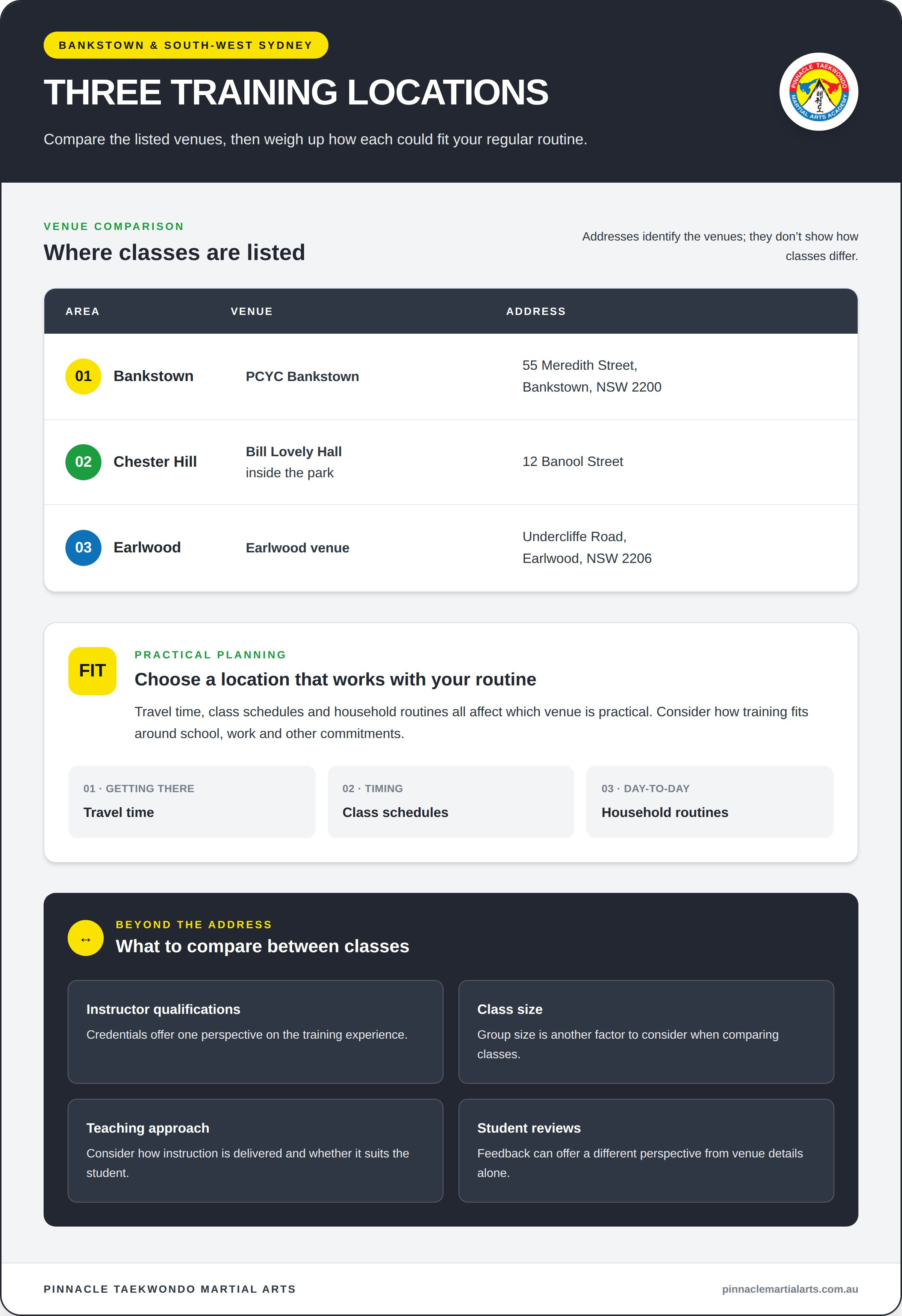
Bankstown offers a central starting point for local karate training. PCYC Bankstown is at 55 Meredith Street, Bankstown, NSW 2200. Its street address gives families a clear venue to locate when planning travel from nearby suburbs. No phone number is included here, so the address is the practical contact detail for identifying the site.
Other venues extend options across south-west Sydney. The Chester Hill training location is at 12 Banool Street, inside Bill Lovely Hall in the park. Earlwood’s venue is on Undercliffe Road, Earlwood, NSW 2206. These named locations can help students choose a class that fits their regular travel across Sydney, rather than focusing on Bankstown alone.
For Condell Park residents, Bankstown is a nearby area to consider when planning a class routine. The Bankstown venue is on Meredith Street, and the Chester Hill location offers another option in south-west Sydney. Travel time, class schedules and household routines all affect which location is practical, so consider how training will fit around school, work and other commitments.
When comparing classes, consider instructor qualifications, class size and reviews alongside location. Venue addresses alone don’t show how classes differ. Credentials, teaching approach, group size and student feedback each offer a different perspective on the training experience, while location affects how easily you can attend regularly.
Which schools offer classes for children and adults? Karate training can suit both age groups, with class content and pace shaped around students’ needs and experience. Children and adults can focus on techniques, coordination and motor skills in a supportive learning environment.
Safety and equipment matter from the first session. Training uses a suitable uniform and martial arts equipment; the protective items needed depend on the techniques and class format. Beginners, women and students with additional needs can benefit from instruction paced to their experience and movement needs. Clear teaching and controlled practice support confident participation.
Self-defence and personal development
Self-defence learning combines awareness, movement and controlled practice. In karate, students develop balance, distance judgement and responses to a partner’s movement. Taekwondo also trains coordinated movement and defensive techniques. Both martial arts give students the chance to practise staying composed, following instruction and responding with control. The aim is practical learning, not aggression.
Respect is fundamental to self-defence training. Instructors set expectations for listening, taking turns and treating training partners carefully. For example, students practise a technique at a controlled pace and pause when instructed. This helps them manage their energy and respect boundaries. A positive class culture supports children and adults as they learn to use their skills responsibly.
Karate styles can differ in emphasis, movement and technique. Some training focuses on hand techniques and stable stances, while Taekwondo is known for varied kicking techniques. The right fit depends on what a student wants to develop, their comfort with movement and how they respond to the teaching approach. Instructors guide practice to suit the class and students’ experience.
Effective self-defence instruction breaks learning into manageable steps. Students first learn a movement without pressure, then practise with a partner under instructor guidance. Clear demonstrations, repetition and feedback help refine timing and control. Beginners can build confidence by focusing on one technique at a time, while experienced students can strengthen their responses through continued practice.
Self-defence also includes recognising when to create distance, seek help or leave an uncomfortable situation. Physical techniques are only one part of personal safety. For families seeking structured martial arts learning, self-defence training options can provide a practical next step for developing confidence, respect and controlled movement.
Benefits including fitness, confidence, focus and discipline
A karate session gives children and adults a structured way to move, learn and practise. Warm-ups prepare the body, while stance work, footwork and repeated techniques build an active training routine. Switching between instruction and practice also asks students to listen, remember a sequence and stay focused. Regular participation develops fitness, with effort matched to each student’s ability and experience.
Confidence can grow through achievable learning steps. A student might start by practising a stance, then add a movement and apply an instructor’s correction. Completing each step makes progress visible without comparing students with their classmates. For a child, that experience can support confidence in speaking up or attempting a challenging school task. Adults can use practice to work towards personal goals, too.
Discipline develops through habits students repeat: arriving ready, listening when someone else speaks, following directions and treating training partners respectfully. These actions connect martial arts practice with patience, care and self-control. Children can learn to wait their turn; adults can practise staying attentive through a sequence. A welcoming class helps new students participate while maintaining clear expectations.
Focus and physical effort work together. A student might follow an instructor’s demonstration, remember the order of movements and adjust their balance during practice. This gives concentration a practical purpose. Repeated movement also challenges coordination and stamina. Progress depends on consistent participation and thoughtful practice, not a single class. Over time, students can notice improvements in technique, control and their ability to work through a difficult movement.
Class progression and belt milestones
Belt progression gives students visible milestones as they develop karate skills. Early training covers basic stances, movements and class etiquette. With practice, students refine their technique, control and fitness. Each stage supports personal growth, while respect for instructors and training partners remains central to learning. Progress depends on commitment and developing the skills expected at each level.
For children, age-appropriate programmes can make that path easier to follow. The Mini Rangers programme is listed for children aged 3-6 years, while Martial Rangers is for ages 7-12. Teen’s Martial Arts is listed for teenagers aged 13-18 years. These age groups provide a practical way to organise learning and support children as their coordination, confidence and training needs change.
Black belt is a significant milestone, not a shortcut or a finish line. Students may achieve black belt in 3-4 years, depending on their commitment. Consistent attendance, focused practice and steady improvement shape that journey. The pace is personal: the time alone doesn’t show how well someone has learned a technique or applied feedback. A belt recognises progress, while continued training strengthens the skills behind it.
Karate uses a belt pathway to mark progression, unlike boxing. When choosing a programme for a child, consider whether its teaching pace, age group and class atmosphere support steady learning. For adults, clear milestones can help maintain motivation alongside fitness goals. In either case, progress comes through repetition, patience and respect, not simply collecting grades.
Ready to take a practical step towards structured progression? Explore kids’ karate training and find a programme that supports skill development, confidence and personal growth.
Pinnacle Taekwondo Martial Arts
Pinnacle Taekwondo Martial Arts offers structured martial arts training for children through its Kids Martial Arts, Kids Kung Fu, Kids Self Defence and Kids Taekwondo programmes. Families can choose from different ways to introduce movement, technique and personal development through guided practice.
To decide what training may suit your child, consider their interests and the skills they’d like to develop. Self-defence, martial arts foundations and Taekwondo each offer a different focus. Contact Pinnacle Taekwondo Martial Arts to discuss a suitable starting point for your family.
Choose a strong first step
Starting a martial arts routine begins with choosing a goal that matters to you or your child. That might mean adding regular activity to the week, learning practical skills or finding a structured setting for personal development. If you’re considering karate classes in Bankstown, think about what would make training worthwhile and sustainable for your family.
Pinnacle Taekwondo Martial Arts offers Kids Martial Arts, Kids Kung Fu and Kids Self Defence, giving families different starting points for a child’s martial arts journey. Start with a conversation about your goals and the kind of learning experience you’re looking for.
Contact Pinnacle Taekwondo Martial Arts to discuss a suitable next step. Take the first step with purpose, and keep building from there.
Frequently Asked Questions
Are Parents Allowed to Watch?
Parents can accompany children, but whether you can observe from the training area depends on the class setup. Follow the instructor’s directions about where to sit and when to watch, so students can focus and move safely through the session. If your child feels more comfortable with you nearby, tell the instructor before training begins for guidance on the class routine.
My Child Is Not Athletic, Will They Feel Left Out?
No previous athletic experience is needed to begin learning karate. Children can develop coordination, fitness and technique through practice rather than arriving with those skills already mastered. If a movement feels challenging, your child can focus on one step at a time, such as learning a stance before adding a sequence. Encouragement and steady effort matter more than starting ability.
What can I expect at my first class?
Expect an introduction to the class routine, basic movements and instructor-led practice. Wear comfortable clothing that allows movement, and arrive ready to listen and follow directions. The instructor can demonstrate a technique, then guide students through practising it at a manageable pace. You don’t need to know karate beforehand; a first session is a chance to experience the teaching style and training atmosphere.
What karate classes are available in Bankstown, NSW?
Karate classes in Bankstown are one of several martial arts options, alongside Taekwondo, Kung Fu, Kickboxing, Hapkido and self-defence. Children can join Kids Karate and other age-focused martial arts programmes, while adults can choose from structured martial arts classes. The right fit depends on the student’s interests, goals and preferred style of movement.
Where are Bankstown karate dojos located, and what are their opening hours?
Training locations include Bankstown, Chester Hill, Earlwood, Marrickville and Caddens, serving families across Sydney, including the Inner West, South West and Bankstown areas. Classes take place at their respective venues, so plan your visit around the relevant session rather than assuming all-day access. If you’re travelling from Bankstown to Marrickville, for example, factor in the separate suburb and venue when organising your trip.
How much do karate classes in Bankstown cost, including trial classes and enrolment fees?
Pricing depends on the programme, class format and any equipment or uniform requirements, and is provided after a quote request. Trial-class and enrolment costs also depend on the individual arrangement. Ask about the total cost and what it covers, including any required uniform or training equipment, before deciding which programme suits your household budget.